
This guide explains how a simple dashboard can help you better understand your spending and manage your finances.
Managing personal finances can become difficult when income, expenses, savings, debts and other financial information are spread across different apps, notebooks and bank accounts.
A personal finance dashboard provides a simple way to bring this information together in one organized place. Instead of trying to remember where your money went each month, you can use a structured system to record income, monitor spending, track savings, manage debt and review changes in your overall financial position.
Why Is Tracking Your Finances Important?
Knowing how much money you earn is only one part of managing your finances. You also need to understand where that money goes.
Small purchases can add up over time, while recurring bills and debt payments can make it difficult to see your true monthly spending. Without consistent tracking, savings goals can also lose momentum.
A financial tracking system allows you to see important information such as:
- How much income you receive
- How much you spend
- Which categories take up most of your budget
- How much you save
- How much debt you have
- Whether your net worth is increasing or decreasing
The goal is not simply to record numbers. It is to make your financial information easier to understand and review.
What Is a Personal Finance Dashboard?
A personal finance dashboard is a centralized system for organizing important financial information. It can include income, expenses, monthly budgets, savings goals, debt balances, net worth and spending categories.
A spreadsheet-based dashboard can be particularly useful because it allows you to enter your own information and customize the system according to your circumstances.
Instead of maintaining separate spreadsheets for expenses, savings and debt, a dashboard can bring these areas together in one place.
What Should a Personal Finance Dashboard Track?
1. Income
Income tracking provides a starting point for understanding your finances. You can record salary, freelance income, business income, side-hustle income, rental income, interest and other sources of money coming into your household.
2. Expenses
Expense tracking helps you understand where your money is going. Common categories include housing, food, transportation, utilities, healthcare, insurance, debt payments, entertainment, shopping, education, savings and investments.
Recording expenses throughout the month creates a clearer picture of your actual spending rather than relying on memory.
3. Budget
A budget gives your money a plan. By comparing planned spending with actual spending, you can identify areas where you spent more or less than expected.
The purpose is not necessarily to create a perfect budget every month. Instead, the information can help you make better adjustments to your spending plan over time.
Related Article
```How to Create a Monthly Budget That Actually Works
Learn how to build a practical monthly budget, organize your expenses and create a spending plan that works with your income and financial goals.
```4. Savings
A savings tracker can help you monitor specific financial goals, such as building an emergency fund, paying for education, purchasing a major item, starting a business or saving for future investments.
Recording your target amount, current balance and progress can make long-term goals easier to monitor.
5. Debt
Debt tracking allows you to organize information such as creditors, outstanding balances, interest rates, minimum payments and payment dates.
Having this information in one place can make your financial obligations easier to understand and monitor.
6. Net Worth
Net worth provides a broader view of your financial position.
Net Worth = Assets − Liabilities
Assets may include cash, savings, investments, property and business assets, while liabilities can include credit card balances, loans and mortgages. Tracking net worth periodically allows you to see how your overall financial position changes over time.
Related Article
```The Complete Beginner's Guide to Investing
Learn the fundamentals of investing, understand key investment concepts and explore the basic principles beginners should know before getting started.
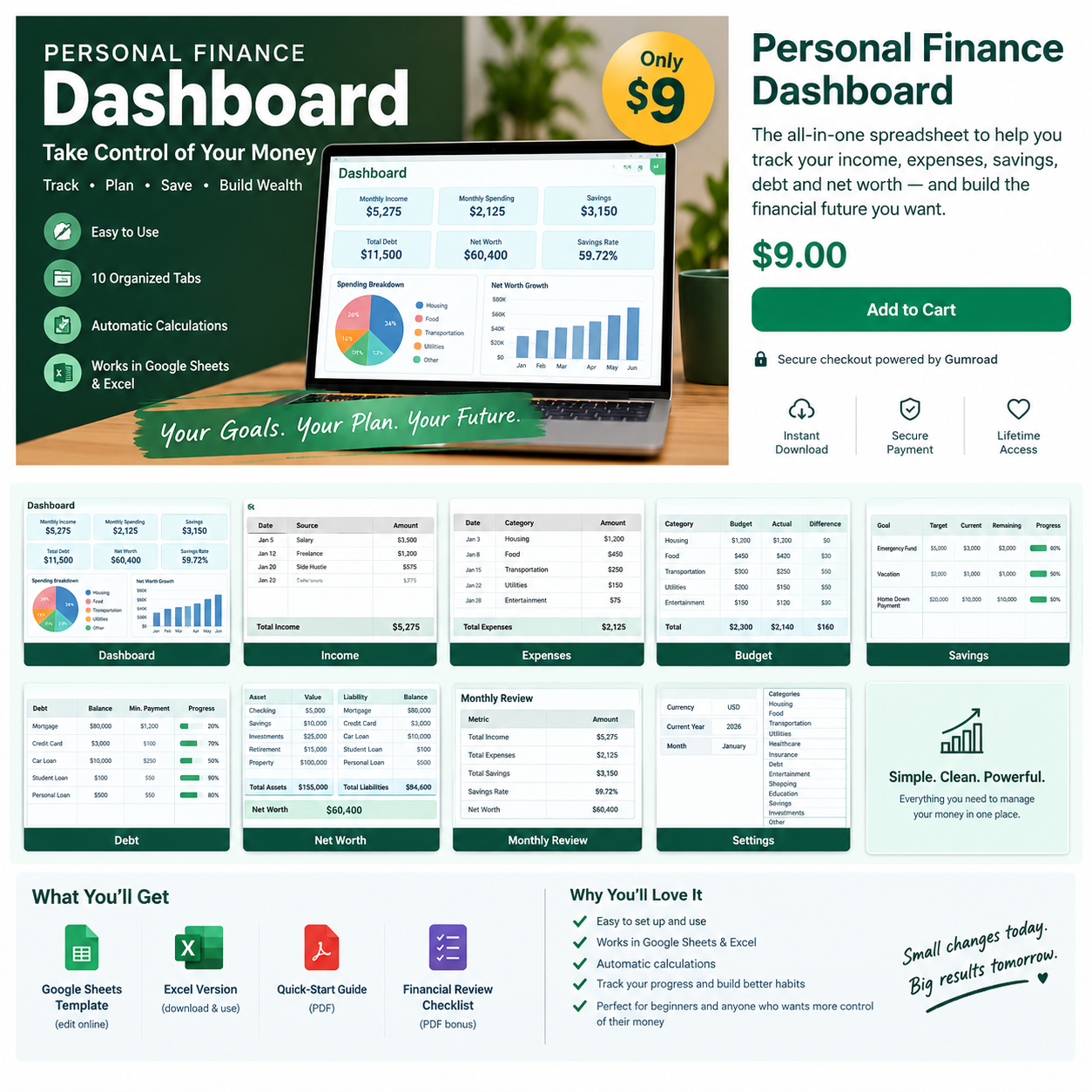
```The Personal Finance Dashboard is designed to bring these major areas of personal money management together in one spreadsheet.
It includes sections for the dashboard, income, expenses, budgeting, savings, debt, net worth, monthly financial reviews and settings.
The system is designed for everyday financial organization and can be useful for beginners, employees, freelancers, students, families and others who want a more structured way to monitor their money.
The dashboard is available in Google Sheets and Excel, giving users flexibility in how they manage their information.
How to Use a Personal Finance Dashboard
Getting started does not require entering everything at once. Begin by recording your current income and recurring expenses. Then track everyday spending as it occurs. Add your savings goals and outstanding debts, followed by your assets and liabilities.
At the end of each month, review your income, spending, savings, debt and net worth.
A weekly check can help you keep up with transactions, while a monthly review can reveal broader changes in your financial habits.
The Personal Finance Dashboard provides a structured starting point for building that habit and reviewing your financial progress over time.
Organize Your Finances in One Place
Track your income, expenses, budget, savings, debt and net worth with a simple financial dashboard available in Google Sheets and Excel.
Get the Personal Finance Dashboard → ```Start organizing your finances today and build a clearer picture of where your money is going, how much you are saving, what you owe and how your overall financial position is changing over time.
Digital product. This dashboard is a financial organization and tracking tool and does not constitute financial, investment, tax or legal advice.