

Confused by ex-dividend dates? Here's a plain-English guide to how dividends work, the four key dates, and what to check before buying a dividend stock.
If you own shares of a company that pays dividends, you receive a portion of its profits in cash, usually every quarter. But dividends follow a calendar, and misunderstanding it is a common beginner trap. Here's how it works.
What Is a Dividend?
A dividend is a payment a company chooses to make to its shareholders, typically out of profits. It is not guaranteed. A company's board of directors decides whether to pay one, how much, and when. Companies can raise, cut, or stop dividends at any time.
The Four Dividend Dates Every Investor Should Know
1. Declaration Date
The company announces the dividend, including the amount per share and the important dates that follow.
2. Ex-Dividend Date
This is one of the most important dates. To receive the upcoming dividend, you generally need to buy the shares before the ex-dividend date. If you buy on or after that date, the dividend generally goes to the previous owner.
On or around the ex-dividend date, a stock's price may adjust downward by approximately the dividend amount, all else being equal, because the company is about to distribute that cash.
3. Record Date
The company checks its records to determine which shareholders qualify for the dividend. Under current U.S. settlement practices, the ex-dividend date is generally set in relation to the record date so eligible purchases are accounted for correctly.
Your broker usually handles the settlement process automatically. However, dates and rules can differ across markets, so check your broker's dividend calendar and the relevant exchange's guidance.
4. Payment Date
This is the date the dividend is scheduled to be paid. The cash usually appears in your brokerage account on or around this date, subject to your broker's processing procedures.
A Simple Dividend Example
Suppose a company declares a quarterly dividend of $0.50 per share and you own 100 shares. If you qualify for the dividend, your expected payment would be:
Illustrative Dividend Calculation
100 shares × $0.50 = $50
You would receive $50 before any applicable taxes or withholding, assuming you qualify for the dividend.
This is an illustrative example, not a prediction of what any particular company will pay. Your actual dividend income depends on the company's declared dividend and the number of eligible shares you own.
Three Common Dividend Investing Mistakes
1. Buying Shares Just Before the Ex-Dividend Date
Some beginners believe they can earn free money by buying a stock immediately before it pays a dividend. However, the share price may adjust to reflect the dividend, and taxes or transaction costs can further affect the outcome. Receiving a dividend does not automatically make an investment profitable.
2. Assuming a High Dividend Yield Means a Great Investment
A very high dividend yield can sometimes signal that investors expect a dividend cut or that the share price has fallen because of financial concerns. Examine the company's earnings, cash flow, payout ratio and overall financial health before investing.
3. Believing Dividends Are Guaranteed
Companies can reduce, suspend or eliminate dividends. A strong dividend history can be useful when researching a stock, but past payments do not guarantee future income.
What to Check Before Buying a Dividend Stock
Before investing in a dividend-paying company, consider these important factors:
- Payout ratio: The proportion of earnings paid out as dividends. A persistently high ratio may raise concerns about sustainability, depending on the company's industry and cash flow.
- Dividend history: Has the company maintained or grown its dividend through different economic conditions?
- Business health: Are revenue, profits and cash flow stable or growing?
- Debt levels: Heavy debt and high interest costs can put pressure on a company's ability to maintain dividend payments during a downturn.
How Are Dividends Taxed?
Dividends may be taxable in a regular brokerage account. In the United States, the tax treatment depends on factors such as whether dividends qualify for preferential tax rates, your income and your filing circumstances. Investors outside the United States may face different tax rules and withholding requirements.
Tax rules can change, so consult current guidance from the relevant tax authority or speak with a qualified tax professional about your circumstances.
How to Track Your Dividend Income
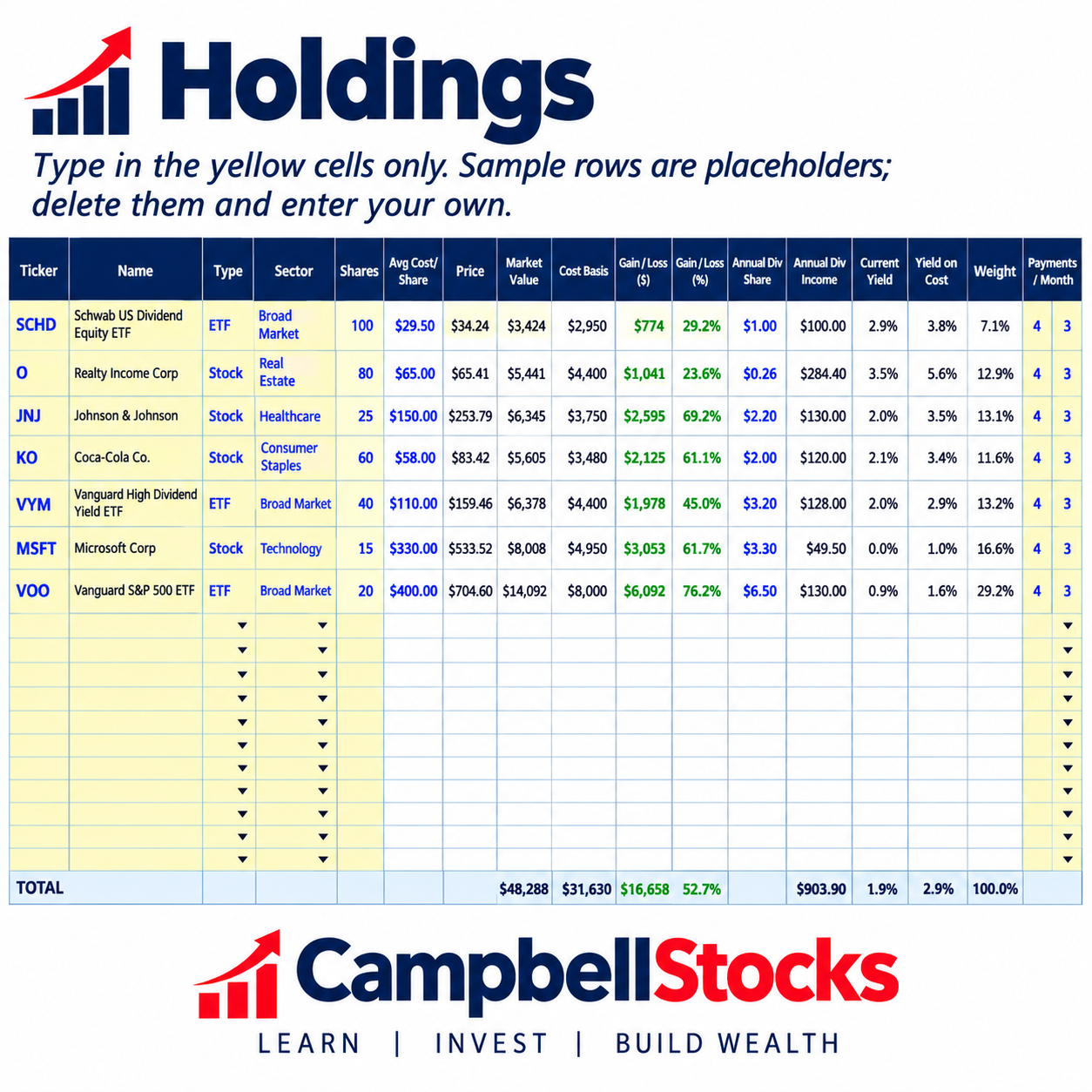
Once you own several dividend-paying stocks, remembering payment dates, tracking income and monitoring your portfolio can become difficult. A dedicated tracker can help you organise your investments and see when payments are expected throughout the year.
I built a Google Sheets tracker that pulls live prices and displays an estimated month-by-month dividend calendar, helping you organise your portfolio and monitor your expected dividend income.
CampbellStocks Investing Tool
Dividend & Portfolio Tracker for Google Sheets
Organise your portfolio, follow live prices and keep track of your estimated dividend income with a practical Google Sheets tool.
Final Thoughts
Dividend investing can provide a stream of income, but understanding the dates, evaluating the company's financial health and recognising the risks are essential. Do not choose a stock based on its dividend yield alone. Research the business, consider whether its payments are sustainable and keep track of your investments over time.
Disclaimer: This article is for educational purposes only and does not constitute investment, tax or legal advice. The dividend calculation is illustrative and uses hypothetical figures. Conduct your own research or consult a qualified professional before making investment decisions.