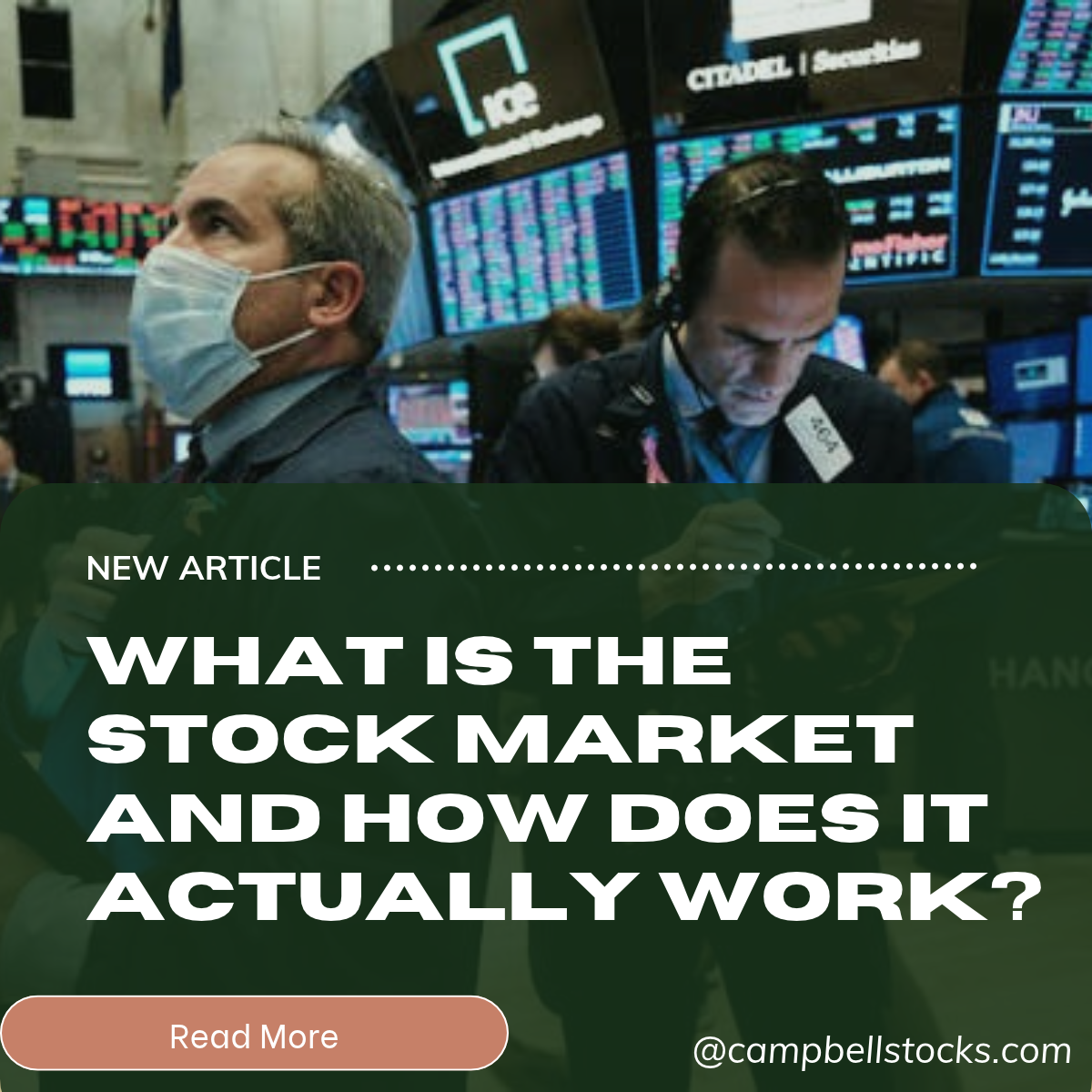
The stock market is not a chaotic casino, it is a global network of regulated marketplaces where everyday people buy ownership in real businesses. This guide breaks down how the stock market actually operates behind the scenes, explaining the difference between primary and secondary markets, how order books and market makers execute trades in milliseconds, what truly drives stock prices up and down, and the two proven ways long-term investors build wealth.
Ask ten people what the stock market is, and nine will describe a room of shouting traders or a screen of flashing red and green numbers. That Hollywood image misses the real story.
At its core, the stock market is a global network of regulated marketplaces where buyers and sellers trade tiny pieces of ownership in real companies. Most beginner guides stop at "buy low, sell high," but understanding how the market actually works behind the scenes gives you a real advantage.
Once you understand the plumbing, including how prices move, who sits on the other side of your trade, and why companies list shares at all, investing stops feeling like gambling and starts looking like business ownership.
In This Guide
What a share of stock really is
What happens in the seconds after you tap "Buy"
What makes prices move, and how people actually make money
The key terms every investor should know
1. Understanding Stock Ownership
Before you understand the market, you have to understand the product being sold. Imagine a local bakery called Sunrise Breads is wildly successful. The owner wants to open 50 new locations, which requires $10 million. Instead of taking a massive bank loan with crushing interest, the owner divides the company into equal pieces and sells them to the public.
- Each piece is called a share of stock (or equity).
- If you buy 100 shares for $1,000, you legally own 0.01% of Sunrise Breads.
- As a part-owner, you benefit when the company grows more valuable and, in many cases, receive a slice of profits as dividends.
The Two Markets You Never Hear Distinguished
Most articles treat the stock market as one place, but every stock goes through two separate markets:
2. How the Market Works Behind the Scenes
When you tap "Buy" on your phone, your order does not vanish into thin air. Within fractions of a second, it passes through a chain of infrastructure. Here is the journey:
Step 1
Your Broker Routes the Order
You cannot walk up to the New York Stock Exchange (NYSE) or Nasdaq with cash in hand. You go through a licensed brokerage firm such as Fidelity, Charles Schwab, Vanguard, or Robinhood. Your broker verifies you have the money and routes your order electronically to an exchange.
Step 2
The Order Book and the Bid-Ask Spread
Every stock on an exchange has a live digital ledger called an order book, with two sides:
The highest price a buyer is currently willing to pay.
The lowest price a seller is currently willing to accept.
The tiny gap between them is the bid-ask spread. For giants like Microsoft it is often just a cent. For smaller, less-traded companies it might be $0.25 or more. A trade happens when a buyer meets the seller's ask, or a seller drops to meet the buyer's bid.
Step 3
Market Makers, the Invisible Middlemen
What if you want to sell 10 shares at 2:14 PM on a Tuesday, but no individual investor happens to be buying at that exact millisecond?
You do not have to wait. Specialized firms called market makers (such as Citadel Securities or Virtu Financial) continuously quote both a buy price and a sell price. They buy shares from sellers and hold them for fractions of a second until a buyer comes along. They earn pennies on the spread across millions of trades, and you get instant liquidity.
Step 4
Settlement (T+1)
Once your trade matches, a clearinghouse (like the DTCC in the United States) steps in to guarantee both sides deliver what they promised. Under modern T+1 settlement rules, the stock officially moves into your name and the cash moves to the seller one business day after the trade date.
3. What Actually Makes Stock Prices Move?
In the short term, prices are driven by supply and demand. In the long term, they are driven by business earnings. Here is what shifts supply and demand in real time:
4. Stock Exchanges vs. Stock Indexes
Beginners often mix up exchanges and indexes. Knowing the difference immediately lifts your financial literacy.
The Mall
A stock exchange is where trading happens.
It is the building or server network where shares change hands. The two largest in the world are the New York Stock Exchange (NYSE) and the Nasdaq.
The Report Card
A stock index is a measuring stick.
It tracks a specific group of companies to show how the overall market is doing.
- S&P 500: Tracks 500 of the largest, most profitable U.S. companies.
- Dow Jones Industrial Average (DJIA): Tracks 30 major, established U.S. blue-chip companies.
- Nasdaq Composite: Tracks over 3,000 stocks listed on the Nasdaq exchange, heavily weighted toward technology.
When the evening news says "The market was up 1% today," they are almost always talking about the S&P 500 Index.
5. How Everyday People Make Money
You do not need to stare at charts all day or predict crashes to build wealth. A stock generates money for you in two ways:
1. Capital appreciation
You buy a share for $50, hold it for years while the company grows profits, and eventually sell it for $120. Your profit is $70 per share.
2. Dividends
Mature, profitable companies such as Coca-Cola, Johnson & Johnson, or JPMorgan Chase regularly distribute part of their cash profits to shareholders, usually every three months. Reinvest those dividends automatically to buy more shares, and your wealth compounds faster each year.
Historical Perspective
8% to 10%
Average annual return of the S&P 500 over multi-decade periods, despite world wars, recessions, inflation spikes, and crashes. Past performance does not guarantee future results.
6. Key Terms Every Investor Should Know
Ready for Your First Investment?
How to Start Investing With $100: A Step-by-Step Guide
Move from understanding the stock market to making your first investment with this practical guide.
Frequently Asked Questions
Tap any question to reveal the answer.
Final Thoughts
The stock market is not a casino. It is an ownership engine that lets ordinary people partner with some of the world's most productive businesses. By understanding the primary and secondary markets, how order books and market makers execute your trades, and why earnings drive long-term value, you are already ahead of most new investors.
Disclaimer: This article is for educational purposes only and does not constitute investment advice. Investing involves risk, including the possible loss of principal. Historical returns are not guaranteed. Review current information and consider consulting a qualified financial professional before investing.
This article is for general information and education only. It is not financial, investment, tax or legal advice. Markets carry risk, so do your own research or speak to a licensed adviser before you invest.