


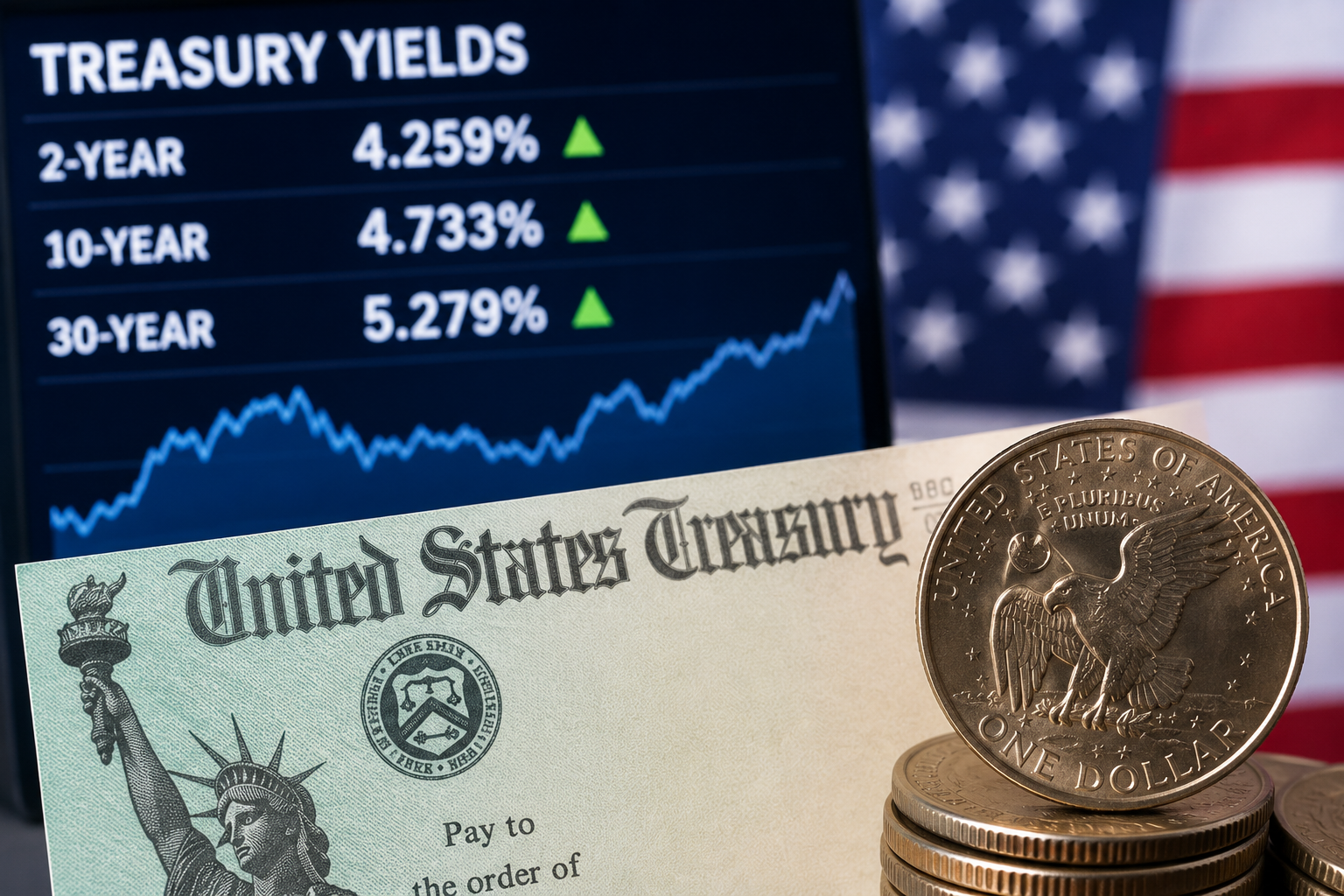
U.S. Treasury yields climbed to their highest levels in more than two decades on Thursday, with the 10-year yield reaching 5.342% and the 30-year yield moving above 5.65%.
The yield on the benchmark 10-year U.S. Treasury note rose as high as 5.342% on October 1, according to Reuters, taking it above its previous 2007 peak and to its highest level since early 2002. The 30-year Treasury yield also climbed above 5.65%, reaching its highest level since 2002.
Treasury yields move inversely to bond prices, meaning the latest increase reflects continued selling of U.S. government debt. The 10-year Treasury is closely watched because it influences borrowing costs across the economy, including corporate debt, mortgages and other financial assets.
Related Article
U.S. 10-Year Treasury Yield Nears 5% as Oil Surge Raises Rate Hike Fears
Read more about the earlier rise in the 10-year Treasury yield and how higher oil prices contributed to concerns about inflation and interest rates.
Treasury market records sharp quarterly increase
The latest move follows an unusually large increase in Treasury yields during the third quarter.
The 10-year yield rose 87.1 basis points during the September quarter, its largest quarterly increase since 1994, according to LSEG data cited by Reuters. A basis point is one-hundredth of a percentage point.
The selloff has occurred even as some recent economic data has reduced expectations for an immediate additional Federal Reserve rate increase.
The Federal Reserve raised its benchmark federal funds target range by 25 basis points in September to 3.75% to 4%, saying inflation remained elevated while economic activity continued to expand at a solid pace.
Inflation remains above the Federal Reserve's target
Data released by the U.S. Bureau of Economic Analysis on Wednesday showed that the Personal Consumption Expenditures price index, the Federal Reserve's preferred inflation measure, increased 3.4% in August from a year earlier.
Core PCE inflation, which excludes food and energy prices, increased 3.0% over the same period. Monthly PCE inflation increased 0.3%, while core PCE increased 0.2%.
Reuters reported that the softer-than-expected inflation figures reduced the immediate pressure for another Federal Reserve rate increase in October. However, the bond market has continued to price in significant risks around inflation and longer-term borrowing costs.
Related Article
Global Bond Yields Surge as Iran Conflict Revives Inflation Fears
See how renewed inflation concerns have affected government bond yields and borrowing costs across global markets.
Higher yields create pressure across financial markets
Higher Treasury yields can affect investors well beyond the government bond market. As risk-free government borrowing costs rise, companies generally face a higher benchmark when issuing debt, while higher discount rates can reduce the present value investors place on future corporate earnings.
Equity markets have already shown sensitivity to the move. Reuters reported Thursday that Dow futures fell to a more than three-month low as Treasury yields rose, although stronger-than-expected results from Micron Technology provided support for semiconductor shares.
The bond-market pressure is also extending beyond the United States. Government borrowing costs in Britain, France and Japan have risen sharply, highlighting the broader global impact of higher long-term yields.
Investors watch the next U.S. economic data
The Treasury market's next major test will come from incoming economic data, particularly labor-market figures that could influence expectations for Federal Reserve policy.
For investors, the key issue is whether elevated Treasury yields persist and how companies, households and financial markets respond to higher long-term borrowing costs.
The 10-year Treasury yield remains the principal benchmark to watch, after its rise to 5.342% marked the highest level since 2002. The 30-year yield's move above 5.65% has likewise pushed long-term U.S. borrowing costs to levels not seen in more than two decades.
Other News
Top Stories- 1 U.S. Employers Add Just 29,000 Jobs in September as Unemployment Rises to 4.2%
- 2 Micron Posts Record $54.2 Billion Revenue as AI Memory Demand Drives Chip Boom
- 3 Singapore Pays Citizens to Read Books for 15 Minutes a Day to Fight ‘Brain Rot’
- 4 Jimmy Kimmel Criticizes FCC Over Rules Blocking ABC Interview With Senate Candidate





Comments (0)
You must be logged in to post comments.
No comments yet. Be the first to start the conversation!