
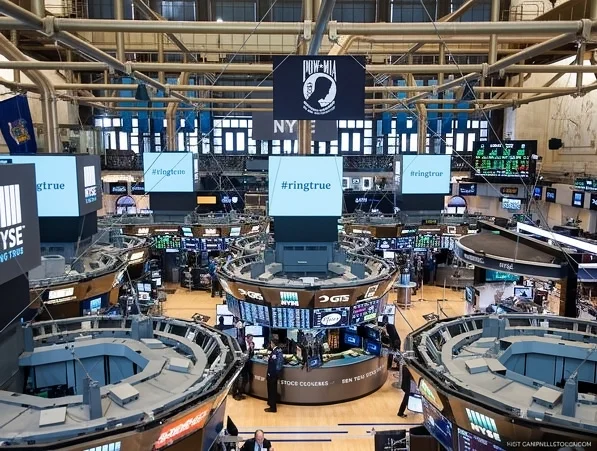
Underlying U.S. inflation accelerated faster than Wall Street anticipated in October while third-quarter economic growth was revised sharply higher, cementing market expectations for another Federal Reserve interest rate hike next month.
According to data released Wednesday, November 25, 2026, by the Bureau of Economic Analysis (BEA), the core Personal Consumption Expenditures (PCE) price index, which excludes volatile food and energy costs, rose 3.3% year-over-year. That topped consensus forecasts of 3.2% and marked its fastest annual pace since late 2023.
Headline PCE inflation, the central bank’s official benchmark, increased 3.8% from a year earlier, up from 3.7% in September and matching economists’ projections. On a monthly basis, both headline and core PCE prices climbed 0.3%. Within the underlying price breakdown, food and beverage costs increased 0.4% after holding flat for two consecutive months, while services spending continued to drive the bulk of nominal consumer outlays.
Simultaneously, the Bureau of Economic Analysis released its second estimate of third-quarter Gross Domestic Product, revealing that the U.S. economy expanded at an annualized rate of 4.3%. That figure represents a substantial upward revision from the initial 3.4% estimate and easily outpaced Wall Street’s 3.5% consensus forecast. The stronger expansion was fueled by upward revisions to business investment, government outlays, and consumer spending, reinforcing the view that current monetary policy is not yet restrictive enough to cool aggregate demand.
Related Reading
U.S. Treasury Yields Edge Lower Ahead of Critical PCE Inflation Report and Holiday Closure
Beneath the strong headline growth, October household income and spending figures pointed to a more cautious consumer. Personal income jumped $201.8 billion, or 0.7% month-over-month, well ahead of the 0.4% forecast, on the back of wage gains and one-time Medicare Improvement Fund premium rebates. However, nominal personal spending rose just 0.3%, missing estimates of 0.4%. Adjusted for inflation, real personal consumption slipped by $5.8 billion, or less than 0.1%, as households opted to boost their personal saving rate from 3.6% to 4.1%.
For financial markets, the combination of sticky 3.3% core inflation and 4.3% GDP growth leaves virtually no room for a dovish pause from policymakers. Interest rate futures are fully pricing in a quarter-point rate increase at the Federal Open Market Committee’s December 8–9 policy meeting, which would lift the federal funds target range to 4.00%–4.25%. With inflation now running above the central bank’s 2% target for roughly five and a half years, fixed-income traders and equity investors are shifting focus toward how aggressively the Federal Reserve will need to keep tightening borrowing costs into the first quarter of 2027.
This article is for general information and education only. It is not financial, investment, tax or legal advice. Markets carry risk, so do your own research or speak to a licensed adviser before you invest.
Other News
Top Stories- 1 Dangote Refinery Set for Historic NGX Listing on December 1 After SEC Approves Allotment Plan
- 2 U.S. Treasury Yields Edge Lower Ahead of Critical PCE Inflation Report and Holiday Closure
- 3 Dell Revenue Doubles to $54.9 Billion in Q3 as AI Server Backlog Surges to $132.3 Billion
- 4 Huawei Convicted on 10 Criminal Counts in Landmark U.S. Trial: Financial Fallout, RICO Acquittal, and Market Impact



Comments (0)
You must be logged in to post comments.
No comments yet. Be the first to start the conversation!