Learn what the Federal Reserve does, how interest rates and quantitative easing work, and why Fed decisions move global stock, bond, and currency markets.
Every few weeks, global stock markets pause in anticipation of a single short statement from Washington, D.C. Within seconds of its release, enormous sums shift across stocks, bonds, currencies, and commodities.
That announcement comes from the Federal Reserve, commonly known as “the Fed.”
Even if you invest in local markets or global index funds rather than individual U.S. stocks, the Federal Reserve is arguably one of the most powerful forces influencing your portfolio. Understanding what the Fed actually does, and why Wall Street hangs on its every word, removes the mystery behind sudden market rallies and sell-offs.
Here is a plain-English breakdown of how the U.S. central bank works and why its decisions ripple across the entire financial world.
The Short Version
- The Fed is the central bank of the United States, a “bank for banks.”
- Its two goals are maximum employment and stable prices (about 2% inflation).
- Its main tools are interest rates, bond buying and selling, and forward guidance.
- Because the U.S. dollar is the world’s reserve currency, Fed decisions affect investors everywhere.
1. What Is the Federal Reserve?
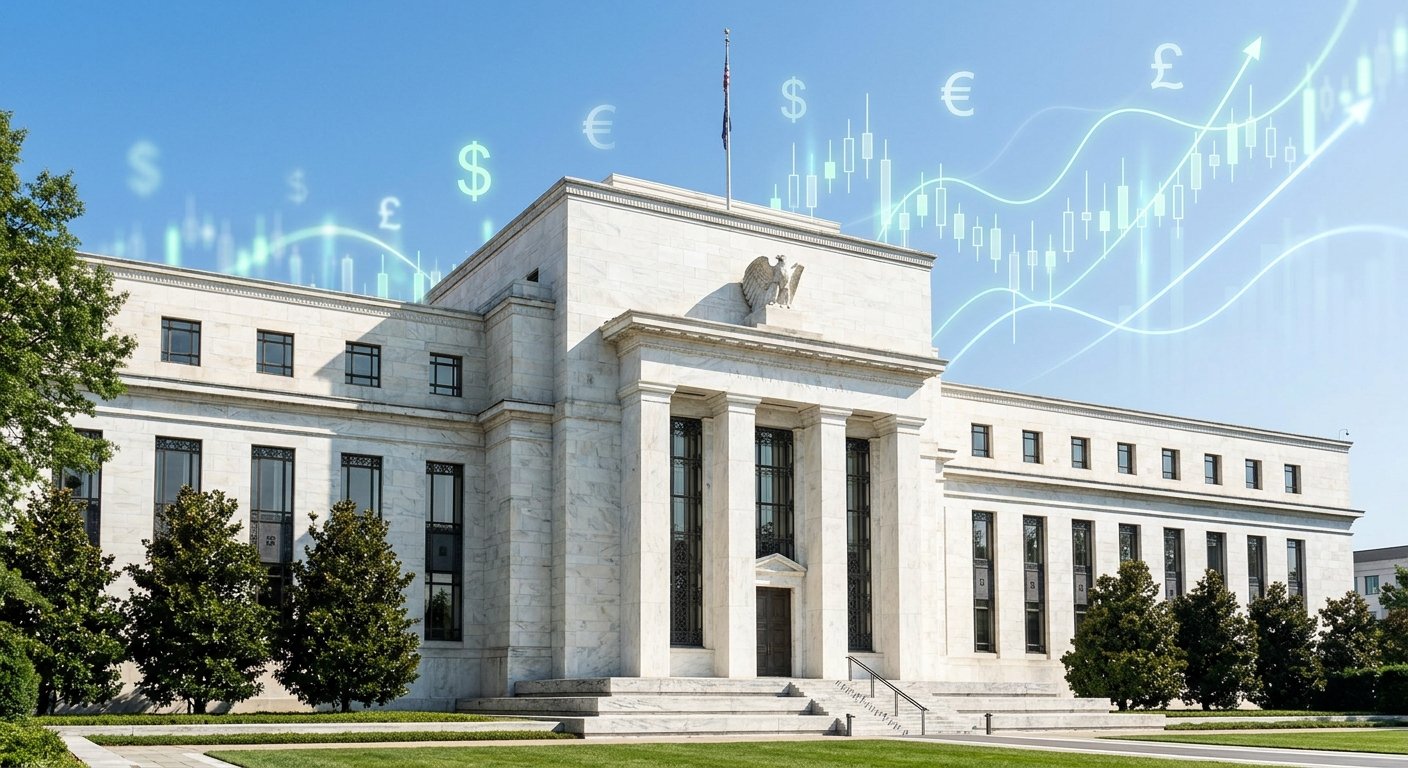
Founded in 1913 after a series of severe banking panics, the Federal Reserve System is the central bank of the United States.
Unlike commercial banks such as JPMorgan Chase or Bank of America, you cannot walk into a Federal Reserve branch to open a checking account or apply for a personal loan. Instead, the Fed serves as the “bank for banks” and the financial guardian of the U.S. economy.
To keep monetary policy insulated from short-term political pressure, the Federal Reserve operates independently within the government. It consists of three main parts:
- The Board of Governors: Seven leaders appointed by the U.S. President and confirmed by the Senate, based in Washington, D.C.
- 12 Regional Federal Reserve Banks: Located in major cities across the country (such as New York, Chicago, and San Francisco) to monitor local economic conditions.
- The Federal Open Market Committee (FOMC): The 12-member decision-making group that meets eight times a year to set U.S. interest rates. When investors talk about “the Fed meeting,” they are referring to the FOMC.
2. The Fed’s Dual Mandate: Jobs and Prices
Everything the Federal Reserve does revolves around two primary goals assigned by the U.S. Congress, known as the Dual Mandate:
- Maximum Employment: Ensuring the economy is strong enough that virtually everyone who wants a job can find one.
- Price Stability: Keeping inflation, the rate at which everyday goods and services get more expensive, low and predictable, typically targeting 2% per year.
These two goals exist in a constant tug-of-war. When the economy grows too fast and unemployment drops very low, businesses raise prices and wages, causing inflation to spike. Conversely, when the Fed steps in to cool down inflation, economic growth slows and unemployment can rise.
The Fed’s core job is acting like the driver of a car: tapping the gas pedal when the economy stalls, and tapping the brakes when inflation overheats.
3. The Fed’s Three Main Tools
To steer the world’s largest economy without directly controlling businesses or consumers, the Federal Reserve relies on three primary levers.
Tool 1: The Federal Funds Rate (Interest Rates)
This is the Fed’s most famous tool. The federal funds rate is the target interest rate at which commercial banks lend money to each other overnight. While the Fed does not directly set mortgage rates, credit card rates, or corporate loan rates, those rates tend to move in the same direction as the federal funds rate.
- Cutting rates (dovish policy): When the economy is sluggish or entering a recession, the Fed lowers interest rates. Borrowing becomes cheaper, encouraging businesses to expand and consumers to buy homes and cars.
- Raising rates (hawkish policy): When inflation climbs too high, the Fed hikes interest rates. Borrowing becomes expensive, slowing down spending and cooling price increases.
Tool 2: Open Market Operations and Quantitative Easing (QE)
Beyond setting interest rates, the Fed can directly adjust the supply of money in the financial system by buying or selling U.S. government bonds.
- Quantitative easing (QE): During severe crises, such as the 2008 financial crash or the 2020 pandemic, lowering interest rates to zero isn’t always enough. The Fed steps in to buy massive amounts of Treasury bonds and mortgage-backed securities. This injects fresh cash into the banking system, pushes long-term interest rates down, and encourages investors to buy riskier assets like stocks.
- Quantitative tightening (QT): When the economy recovers, the Fed reverses the process by letting bonds mature without replacing them or actively selling them, pulling liquidity out of the financial system.
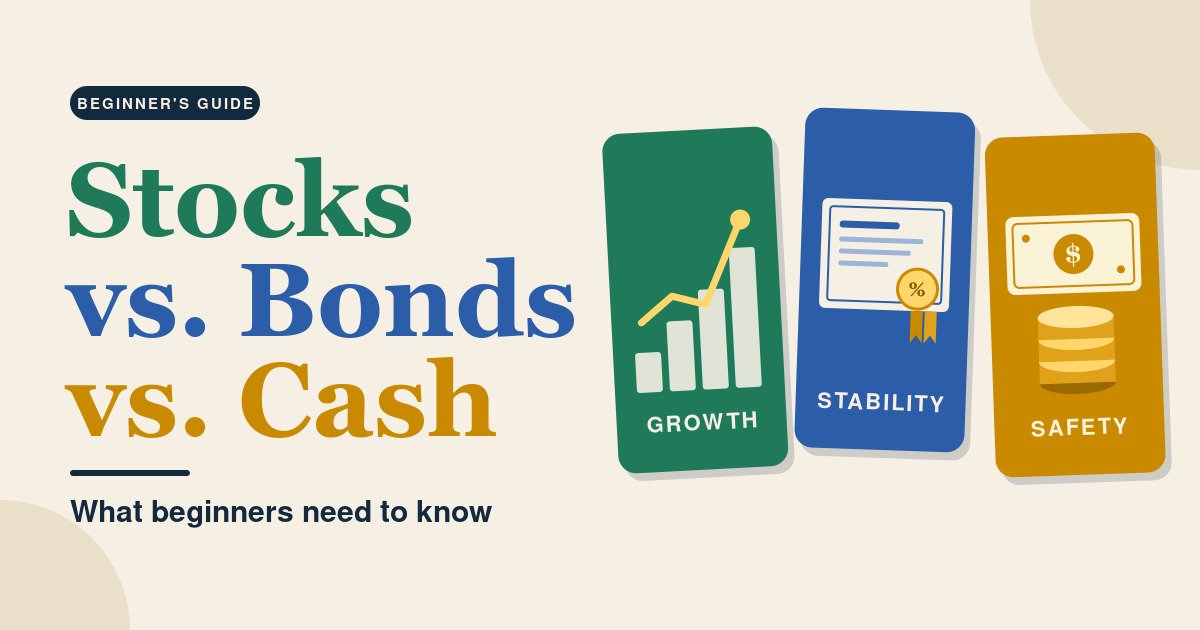
Government bonds sit at the center of this tool. To see how they fit into your own portfolio, read our guide to Stocks vs. Bonds vs. Cash: What Beginners Need to Know.
Tool 3: Forward Guidance (The Power of Words)
Sometimes the Fed moves markets without changing interest rates at all. Through FOMC statements, press conferences, and speeches by the Fed Chair, the central bank signals where it expects rates to go months or years into the future. Because financial markets are forward-looking, investors immediately adjust asset prices based on what the Fed hints it will do next.
4. Why Federal Reserve Decisions Move the Stock Market
A common phrase on Wall Street is “Don’t fight the Fed.” When the Fed is cutting rates and adding liquidity, stocks historically tend to rise. When the Fed is aggressively raising rates, stocks face strong headwinds.
There are four direct reasons why Fed policy shifts stock prices:
1. Corporate Borrowing Costs and Profits
Almost every major public company uses debt to fund operations, build factories, or buy back shares. When the Fed raises interest rates, companies must pay more interest on new loans or variable-rate debt. Higher interest expenses eat directly into net profits, leaving less money for dividends and growth.
2. Consumer Spending Power
Consumer spending accounts for roughly two-thirds of the U.S. economy. Higher interest rates make auto loans, mortgages, and credit card balances more expensive. When households spend more of their paychecks servicing debt, they buy fewer smartphones, vacations, and retail goods, slowing revenue growth for public companies.
3. Competition From Bonds and Cash
Investors constantly compare the potential return of stocks against safer alternatives. When the Fed keeps interest rates near 0%, savings accounts and U.S. Treasury bonds pay almost nothing, forcing investors into the stock market to earn a meaningful return. However, when the Fed raises rates to 4% or 5%, government bonds suddenly offer attractive yields. Many conservative investors pull money out of stocks and lock in bond returns instead.
4. Valuation Math (Discounted Cash Flows)
Professional analysts value stocks by calculating how much a company’s future profits are worth in today’s dollars, a method called Discounted Cash Flow (DCF) analysis. Interest rates act as the “discount rate” in that formula. When interest rates rise, future profits become worth less today. This hits fast-growing technology and AI stocks especially hard, because most of their expected profits lie years in the future.
Related Market Coverage
U.S. Treasury Yields Edge Lower Ahead of Critical PCE Inflation Report and Holiday Closure
5. Why Global Investors Everywhere Watch the Fed
You do not have to live in the United States for the Federal Reserve to impact your wealth. Because the U.S. dollar is the world’s primary reserve currency, Fed policy acts like a global financial tide.
- Currency exchange rates: When the Fed raises U.S. interest rates, global capital often flows into the United States to capture higher yields. This can strengthen the U.S. dollar against other currencies, including the Euro, British Pound, Japanese Yen, and Nigerian Naira. A stronger dollar makes imported goods more expensive globally and increases the burden on foreign governments and companies that borrowed money in U.S. dollars.
- Commodity prices: Global commodities like crude oil, gold, and copper are priced in U.S. dollars. A stronger dollar triggered by Fed rate hikes often puts downward pressure on commodity prices, directly affecting emerging markets and energy-producing economies.
- Global central bank policy: Central banks around the world, from the European Central Bank to the Central Bank of Nigeria, closely monitor the Fed. If the Fed keeps rates high, other central banks often have to keep their own rates elevated to defend their local currencies and prevent capital flight.
6. How Long-Term Investors Should React to the Fed
Watching financial news during a Fed announcement week can make investing feel like a high-stakes guessing game. Analysts dissect every comma in the FOMC statement, trying to predict whether the next rate move will happen in six weeks or three months.
For long-term investors, trying to trade around Fed meetings is usually a losing strategy. Even professional economists frequently get short-term rate predictions wrong.
Instead, use your understanding of the Federal Reserve to stay grounded:
- Expect volatility around FOMC meetings: Markets often swing wildly in the first 30 minutes after a Fed announcement as algorithms react to headlines. Avoid placing market orders right before or immediately after a rate decision.
- Focus on quality balance sheets: Companies with low debt, strong free cash flow, and pricing power can weather high interest rate environments far better than unprofitable companies dependent on cheap borrowing.
- Remember that rate cycles are temporary: The Fed raises rates to fight inflation, and eventually cuts rates when inflation cools or growth slows. Over a 10- to 20-year investing horizon, your returns will come mainly from business earnings and compounding dividends, not from guessing a 0.25% rate adjustment.
Frequently Asked Questions
Click any question below to reveal its answer.
Final Thoughts
The Federal Reserve exists to keep the financial system stable, balance job growth against inflation, and step in during economic emergencies. While its interest rate decisions create powerful short-term waves across global stock and bond markets, those waves are simply part of normal economic cycles.
Once you understand why markets react to interest rates, you stop panicking when headlines warn of a rate hike, and start recognizing how economic cycles create long-term opportunities for patient investors.
Disclaimer: This article is for educational purposes only and does not constitute investment, tax, or legal advice. Market reactions to central bank decisions vary and past patterns do not guarantee future results. Conduct your own research or consult a qualified professional before making investment decisions.
This article is for general information and education only. It is not financial, investment, tax or legal advice. Markets carry risk, so do your own research or speak to a licensed adviser before you invest.