

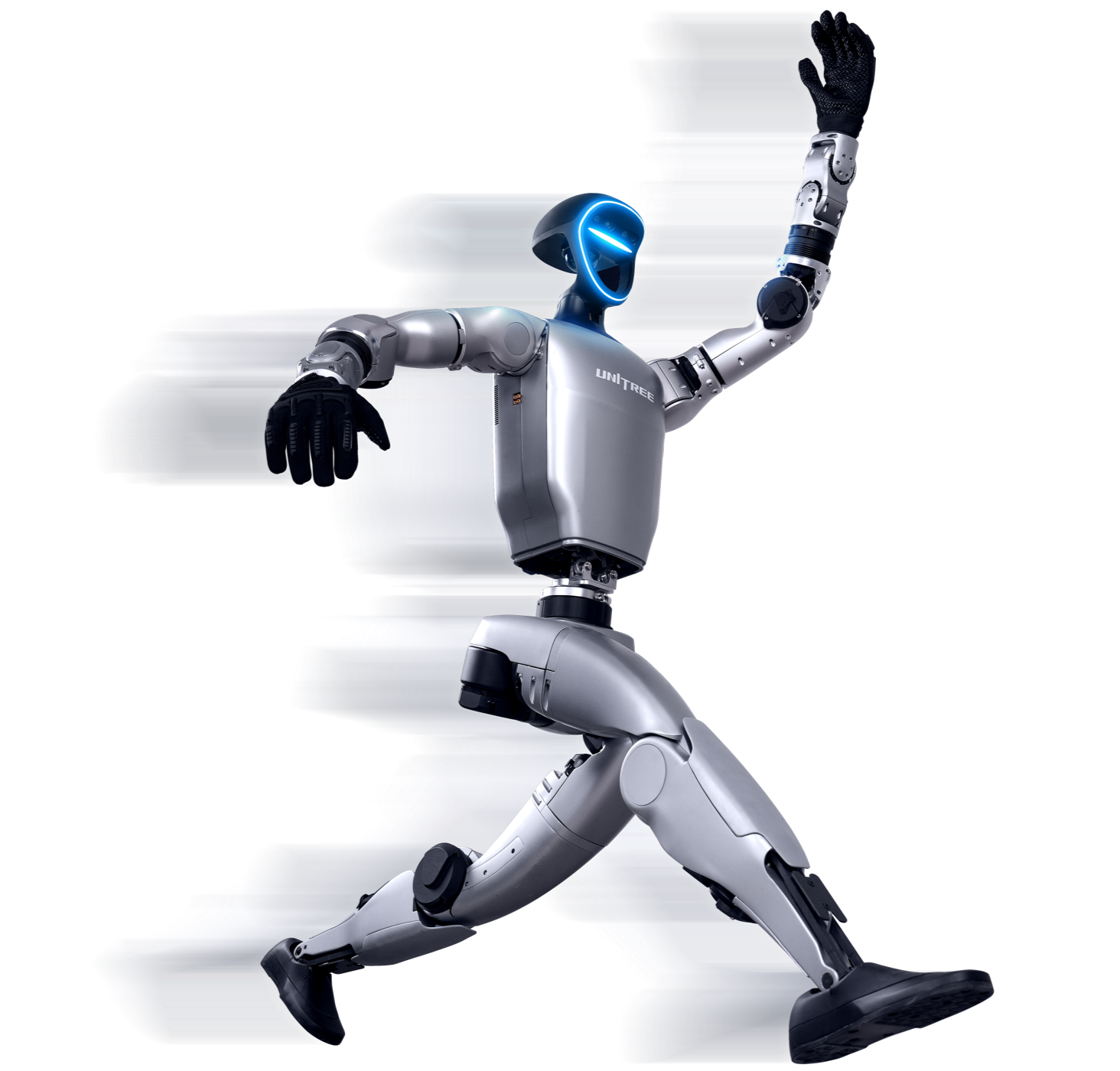
Unitree founder and CEO Wang Xingxing said humanoid robots could be two to 10 years away from a major breakthrough comparable to the impact ChatGPT had on artificial intelligence. His comments came shortly after Unitree's shares surged 460% on their first trading day in Shanghai, highlighting the gap between investor enthusiasm for robotics and the technology's remaining challenges.
Unitree founder and CEO Wang Xingxing said the humanoid robotics industry could be several years away from reaching a breakthrough comparable to ChatGPT, despite rapid advances in artificial intelligence and robotics.
Speaking at the World Robot Conference in Beijing, Wang said the industry is approaching what he described as a potential “ChatGPT moment” for physical AI. He nevertheless cautioned that the technological breakthrough could still be two to 10 years away.
The breakthrough Wang referred to would involve robots becoming capable of understanding unfamiliar environments and carrying out a wide range of tasks based on simple voice or text instructions. Current humanoid robots remain limited in their ability to generalize their capabilities beyond the situations for which they have been trained.
READ ALSO: Germany’s Engineering Industry Urges Europe to Prioritize Humanoid Robots
The comments came just one day after Unitree made a spectacular debut on China's Shanghai Stock Exchange STAR Market. The company's shares closed at 845 yuan, up 460.34% from its IPO price of 150.80 yuan, after rising as much as 629% during the session. Unitree raised approximately 6.1 billion yuan ($904 million) through the offering.
The listing reflects strong investor interest in humanoid robotics as China seeks to expand its position in artificial intelligence and advanced manufacturing. Unitree is one of China's prominent humanoid and quadruped robot manufacturers, with its machines known for demonstrations involving running, dancing and other complex movements.
However, the technology still faces significant challenges before humanoid robots can become widely deployed in homes, factories and other commercial environments. The ability to perform impressive demonstrations does not necessarily translate into reliable performance across unfamiliar real-world situations. The Associated Press reported from the World Robot Conference that some humanoid robots remain more capable of demonstrations than practical everyday or industrial tasks.
China is nevertheless pushing aggressively into the sector. The country's robotics industry is receiving significant investment as companies seek to develop machines capable of performing physical work and addressing longer-term labor challenges.
For Unitree, the contrast between its soaring stock-market debut and Wang's cautious timeline underscores the uncertainty surrounding the next stage of humanoid robotics: investors are already pricing in substantial future growth, while the industry's leaders acknowledge that a truly general-purpose robot may still be years away.








Comments (0)
You must be logged in to post comments.
No comments yet. Be the first to start the conversation!