

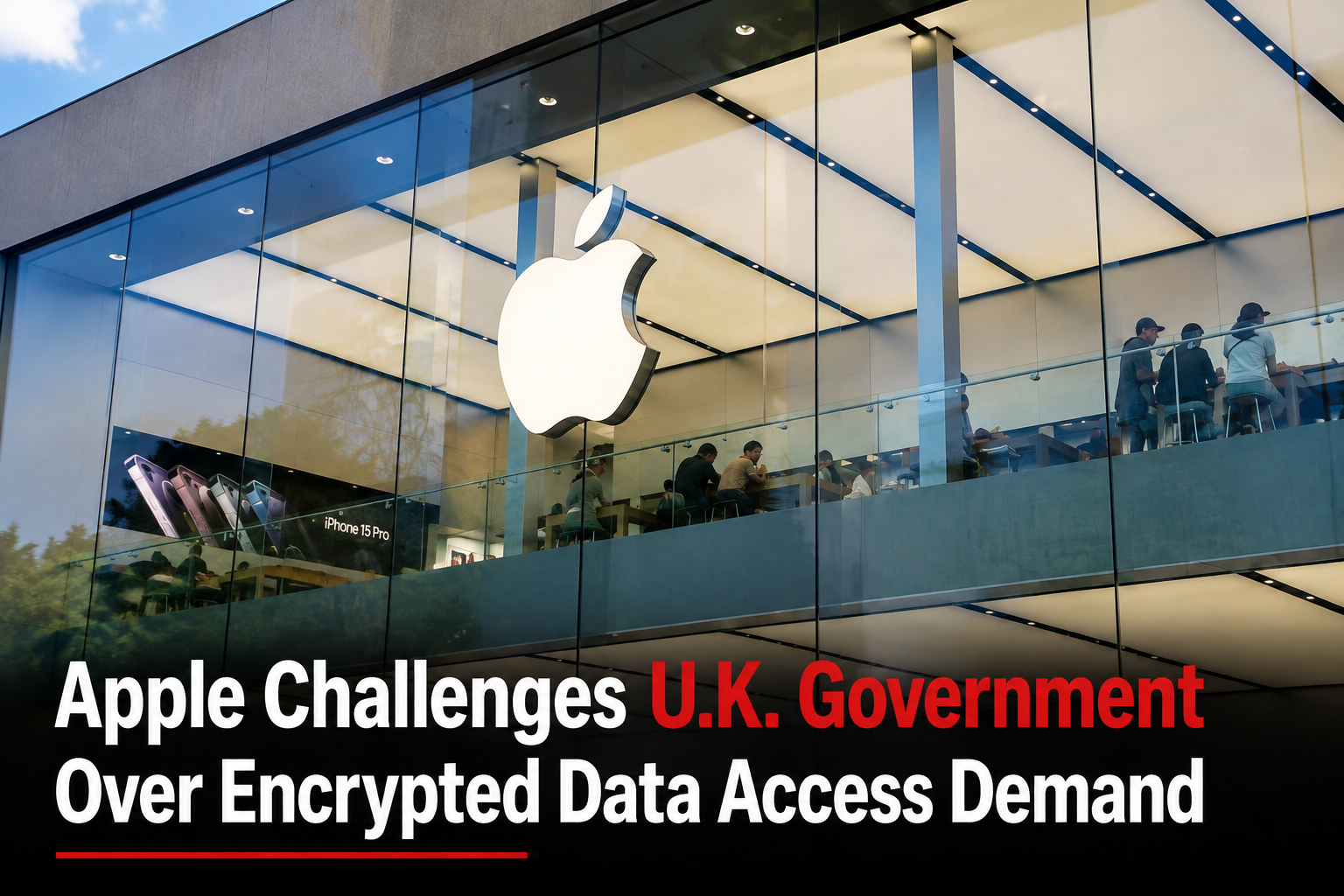
Apple has launched a new legal challenge against the U.K. government's demand for access to encrypted user data, reigniting the debate over privacy and national security.
Apple has filed a new legal challenge against the United Kingdom government over its latest attempt to gain access to encrypted data belonging to British users, escalating a long running dispute over digital privacy, cybersecurity, and government surveillance.
The legal action comes roughly a year after a previous request by U.K. authorities seeking access to encrypted data from both British and American users was withdrawn following political pressure from the United States. Apple confirmed the latest court filing but declined to comment further on the ongoing proceedings.
The U.K. Home Office also declined to discuss the specific legal case but reiterated that its policies seek to balance strong encryption with law enforcement's ability to investigate terrorism, serious crime, and child exploitation under appropriate legal safeguards.
The latest disagreement stems from a government notice reportedly issued under the U.K.'s Investigatory Powers Act, requiring Apple to provide technical access to encrypted cloud data stored by British users.
The request has renewed concerns among privacy advocates and technology companies that such measures could weaken end-to-end encryption by effectively creating a "backdoor" into secure systems.
Apple has consistently opposed such demands, maintaining that introducing any form of privileged access would undermine the security protections relied upon by millions of users worldwide.
The company has repeatedly stated that it has never built a universal access key into its products and does not intend to do so.
Following earlier requests from British authorities, Apple previously suspended availability of its Advanced Data Protection (ADP) feature for new users in the United Kingdom.
Advanced Data Protection extends end-to-end encryption to additional categories of iCloud data, providing users with stronger protection against unauthorized access.
Apple also indicated that existing U.K. customers would eventually need to disable the feature if regulatory requirements remain in place.
The company previously expressed disappointment over the decision, arguing that stronger encryption has become increasingly important as cyberattacks and large-scale data breaches continue to rise globally.
Read more: Alibaba Unveils Powerful Qwen3.8-Max AI Model as Global AI Race Intensifies
British authorities argue that encrypted communications can limit law enforcement's ability to investigate serious criminal activity.
According to the Home Office, the Investigatory Powers Act includes judicial oversight and safeguards designed to ensure that access requests are both necessary and proportionate.
Privacy experts, however, warn that compelling technology companies to weaken encryption could expose users to greater cybersecurity risks while setting a precedent that other governments may seek to follow.
Legal analysts also note that although the current request reportedly focuses only on British users, the dispute could still have wider international implications because it involves a U.S.-based technology company operating globally.
The latest legal challenge highlights the growing conflict between governments seeking greater investigative powers and technology companies committed to protecting user privacy through strong encryption.
The outcome could shape future regulations governing encrypted communications, influence how global technology firms operate across different jurisdictions, and establish important legal precedents for digital privacy rights worldwide.
Investors will also be watching the case closely, as regulatory decisions affecting Apple's privacy features could have broader implications for consumer trust, cybersecurity standards, and future government oversight of major technology platforms.
Other News
Top Stories- 1 U.S. Employers Add Just 29,000 Jobs in September as Unemployment Rises to 4.2%
- 2 Micron Posts Record $54.2 Billion Revenue as AI Memory Demand Drives Chip Boom
- 3 U.S. Treasury Yields Hit Highest Levels Since 2002 as Bond Selloff Deepens
- 4 Singapore Pays Citizens to Read Books for 15 Minutes a Day to Fight ‘Brain Rot’







Comments (0)
You must be logged in to post comments.
No comments yet. Be the first to start the conversation!