

The decline in Chinese inflows is notable given the expanding economic relationship between Nigeria and China in recent years. China remains one of Nigeria's largest trading partners and has financed several major infrastructure projects through loans, construction partnerships and bilateral cooperation.
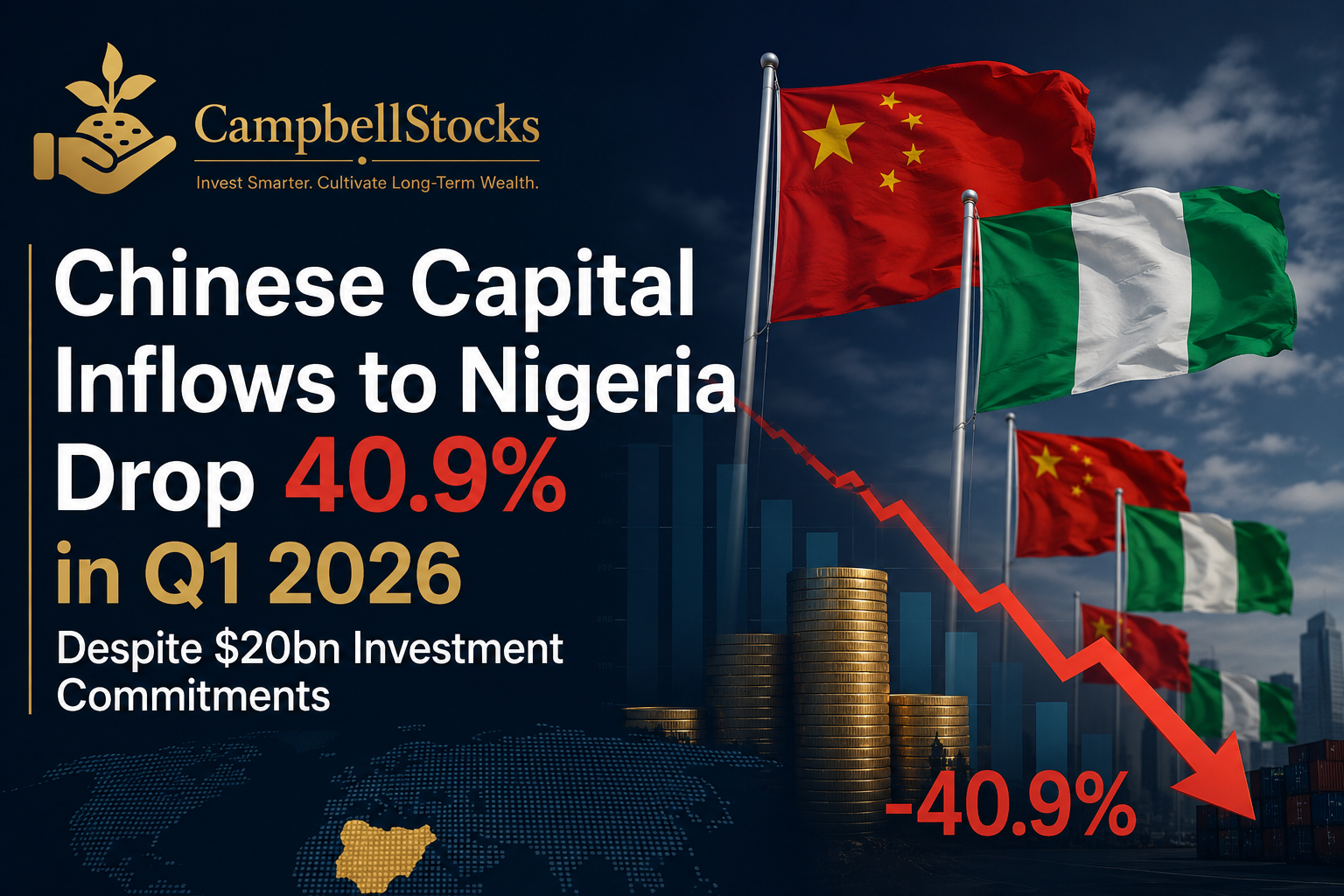
An analysis of the National Bureau of Statistics (NBS) Capital Importation Report for the first quarter of 2026 showed that Chinese capital imports fell to *$5.55 million, down from *$9.39 million** recorded in the corresponding period of 2025. The decline represents a year-on-year contraction of *40.89 percent*.
The latest figure also reflected a *13.69 percent* decrease from the *$6.43 million* reported in the fourth quarter of 2025, indicating that investment inflows from China weakened on both an annual and quarterly basis.
The decline comes less than a year after the Federal Government announced that it had secured more than *$20 billion* in investment commitments from Chinese investors across key sectors of the economy, including manufacturing, energy, mining, agriculture, automotive production and steel.
The commitments were disclosed in July 2025 by the current Minister of Power, *Joseph Tegbe*, who was serving at the time as Director General of the Nigeria-China Strategic Partnership. According to the government, the investment pledges followed a series of engagements after Nigeria and China elevated their bilateral relationship to a Comprehensive Strategic Partnership.
Tegbe said the proposed investments were expected to support industrialisation, improve food security, expand electricity generation and create employment opportunities across the country.
He also stated that the projects were intended to position Nigeria as a major manufacturing hub on the African continent, stressing that the commitments were linked to tangible investment projects rather than expressions of interest alone.
However, the latest capital importation figures suggest that the anticipated investments have yet to translate into higher recorded financial inflows from China.
Capital importation data compiled by the NBS measures foreign capital that has entered the Nigerian economy within the reporting period. As a result, large investment announcements or memoranda of understanding may not immediately appear in official capital importation statistics until funds are actually disbursed and recorded.
The latest figures therefore highlight the difference between investment commitments and realised capital inflows. While investment pledges often signal future economic activity, they typically require regulatory approvals, financing arrangements and project implementation before capital is reflected in official data.
The decline in Chinese inflows is notable given the expanding economic relationship between Nigeria and China in recent years. China remains one of Nigeria's largest trading partners and has financed several major infrastructure projects through loans, construction partnerships and bilateral cooperation.
ommIt remains unclear whether the announced $20 billion in investment citments will be reflected in subsequent capital importation reports as projects advance. As of the first quarter of 2026, there has been no official confirmation that the pledged investments have been fully disbursed or converted into recorded capital inflows.

Other News
Top Stories- 1 Novo Nordisk Shares Fall After Late Stage Heart Drug Misses Key Trial Goal
- 2 Exxon, Chevron Q2 Profits Surge as Higher Oil Prices Boost Earnings Amid Middle East Supply Disruptions
- 3 Amazon Shares Jump 12% While Apple Slides 7% as Earnings Highlight Diverging AI Investment Outlooks
- 4 Goldman Sachs Says South Africa Is on Track for Credit Rating Upgrade




Comments (0)
You must be logged in to post comments.
No comments yet. Be the first to start the conversation!