

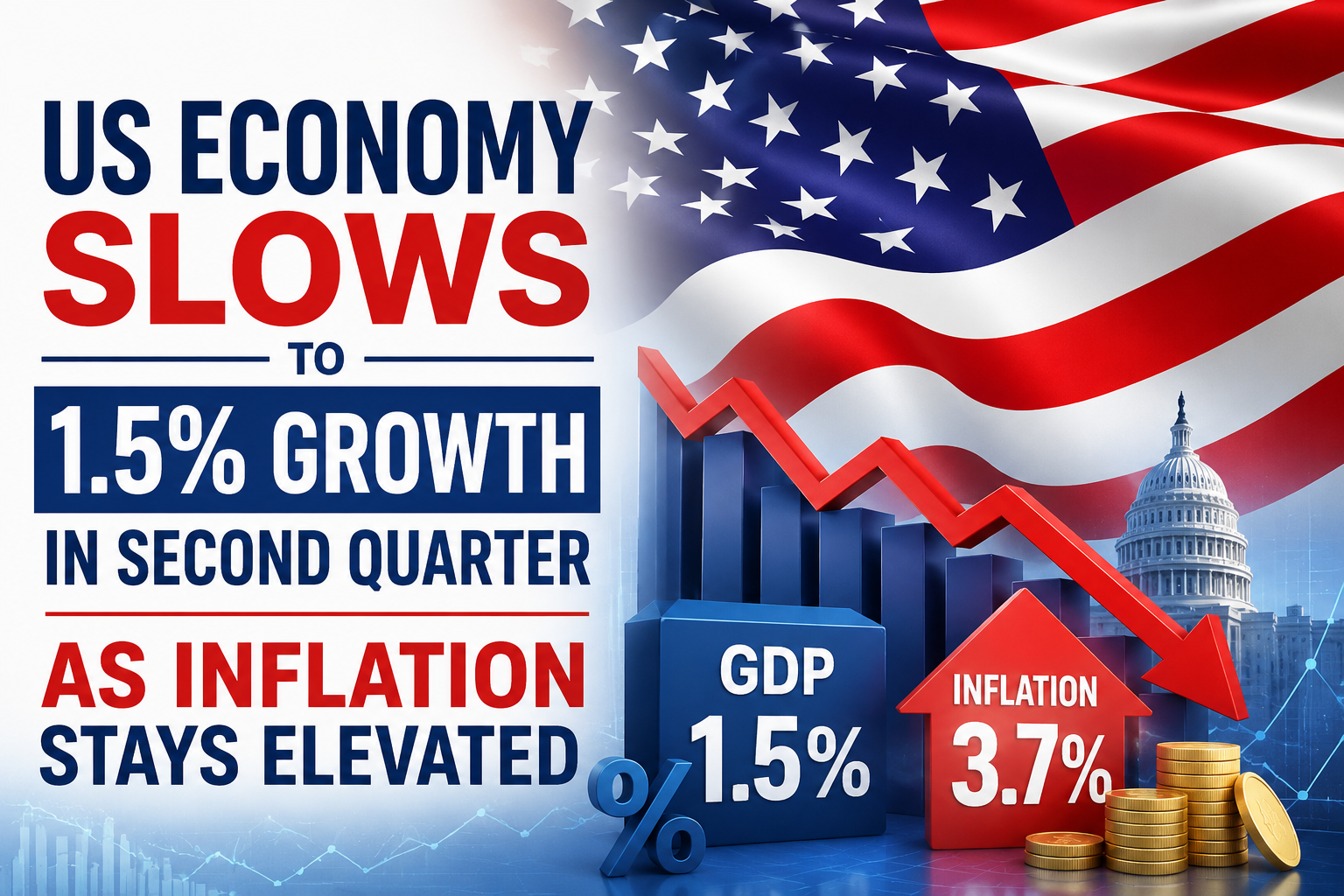
The U.S. economy expanded at a slower than expected annualized rate of 1.5% in the second quarter, missing economists' forecasts, while inflation remained well above the Federal Reserve's 2% target
The U.S. economy lost momentum during the second quarter of the year, with economic growth falling short of expectations even as inflation remained significantly above the Federal Reserve's long-term objective, according to data released on Thursday by the Commerce Department. Gross domestic product (GDP), the broadest measure of economic activity, increased at an annualized rate of 1.5% between April and June after adjusting for inflation and seasonal factors. The figure was below the 1.8% growth economists surveyed by Dow Jones had anticipated and marked a slowdown from the 2.1% expansion recorded during the first quarter. The weaker headline reading reflected softer government activity and lower business inventories rather than a broad deterioration in private-sector demand. At the same time, inflation data suggested that price pressures remain persistent despite signs of moderation on a monthly basis. The Commerce Department reported that the Personal Consumption Expenditures (PCE) price index, the Federal Reserve's preferred measure of inflation, declined 0.1% in June from the previous month on a seasonally adjusted basis. Even with the monthly decline, the annual inflation rate stood at 3.7%, remaining well above the central bank's 2% objective and matching economists' expectations. Core PCE, which excludes the more volatile food and energy categories and is closely watched by policymakers as a better indicator of underlying inflation trends, increased 0.1% during the month. On an annual basis, core inflation measured 3.3%, in line with forecasts, although the monthly increase came in slightly below expectations for a 0.2% rise. The latest economic reports were released one day after the Federal Reserve voted 9-3 to leave its benchmark interest rate unchanged within a target range of 3.5% to 3.75%, where it has remained throughout the year. The decision underscored the central bank's cautious stance as officials continue weighing slowing economic growth against inflation that remains above target. According to the policy vote, three regional Federal Reserve presidents dissented, citing continued concerns over elevated inflation and what they viewed as insufficient progress toward restoring price stability. While labor market conditions have generally stabilized this year, inflation has remained the dominant issue shaping monetary policy discussions. Despite the softer overall GDP figure, several indicators pointed to continued resilience in the private economy. Consumer spending, which accounts for the largest share of U.S. economic activity, rose 2.1% during the second quarter, accelerating sharply from the 0.4% increase recorded in the previous quarter. Meanwhile, final sales to private domestic purchasers—a measure often viewed as a gauge of underlying domestic demand—advanced 3.9%, suggesting that household and business spending remained relatively strong. Other components of the GDP report presented a mixed picture. Gross private domestic investment increased 0.5%, while exports also rose 0.5%. Imports declined 1.5%, a movement that typically supports GDP calculations because imports are subtracted from overall economic output. However, a 0.7% decline in inventories and a 0.3% reduction in federal government spending weighed on overall economic growth, contributing significantly to the weaker headline figure. Financial markets reacted cautiously to the data. Stock index futures moved higher shortly after the reports were released, while Treasury yields rose sharply as investors assessed the implications for future Federal Reserve policy. The combination of slower economic growth and inflation that remains above target presents a complex environment for policymakers. Strong consumer demand continues to support the economy, but persistent price pressures may complicate decisions on when the Federal Reserve can begin easing monetary policy. The latest figures reinforce the balancing act facing the central bank as it seeks to slow inflation without significantly undermining economic activity.








Comments (0)
You must be logged in to post comments.
No comments yet. Be the first to start the conversation!