

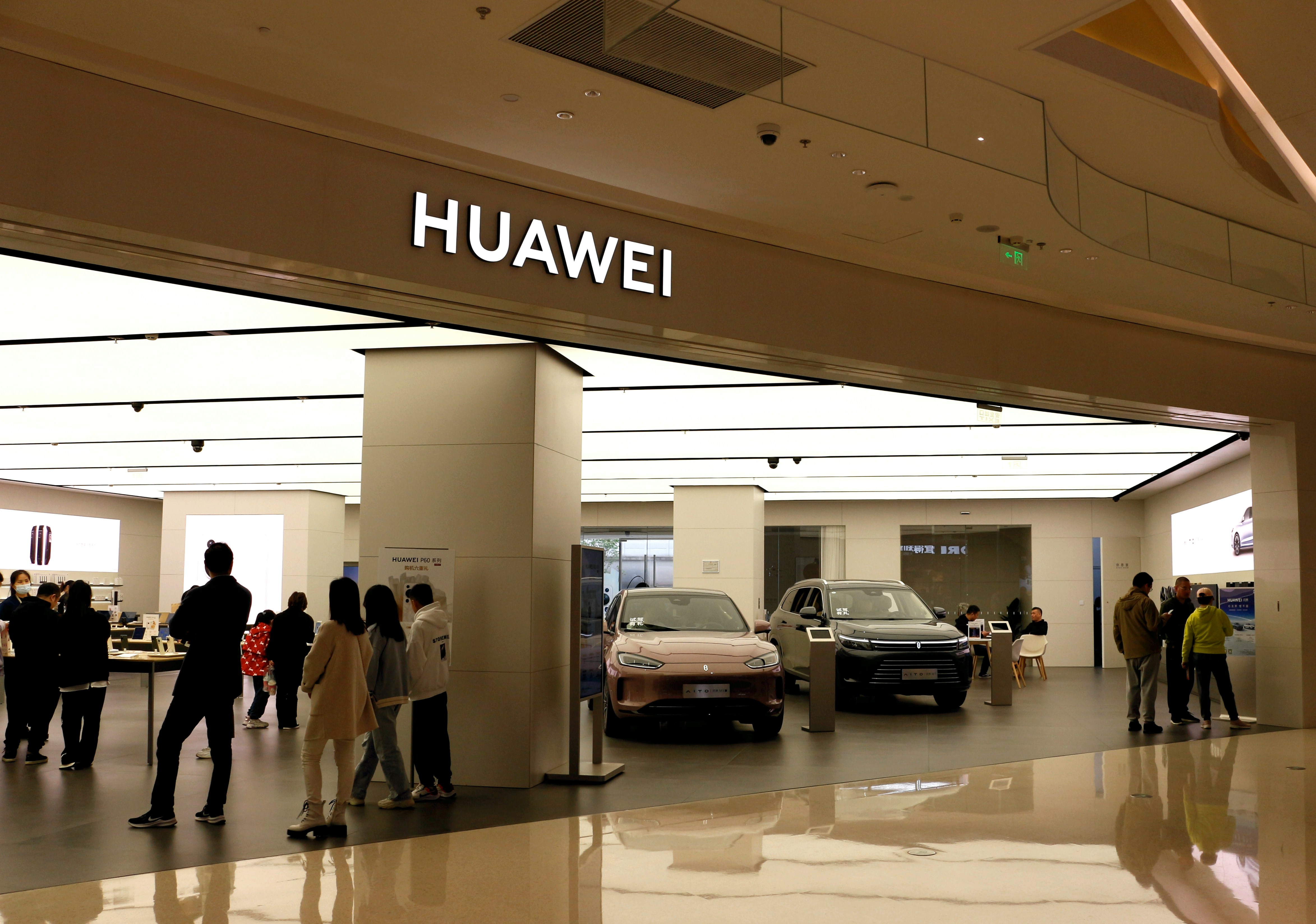
Huawei Technologies is heading to trial in a U.S. federal court over allegations that it misled major financial institutions about its business in Iran and violated U.S. sanctions. The Chinese technology company also faces accusations of stealing trade secrets from American technology companies, conducting business in North Korea and helping Iran with surveillance activities.
Huawei Technologies is facing a long delayed criminal trial in the United States over allegations that it misled banks about its business activities in Iran, as one of the most closely watched legal disputes between Washington and the Chinese technology sector moves into court.
Jury selection is scheduled to begin Tuesday in federal court in Brooklyn, New York, nearly eight years after U.S. prosecutors first brought the case against the Chinese telecommunications giant.
The case centers partly on allegations that Huawei concealed its relationship with Skycom, a company that operated in Iran, from international financial institutions. U.S. prosecutors have alleged that Huawei misrepresented Skycom as an independent business partner while continuing to control its operations. The allegations relate to business conducted in Iran, which was subject to U.S. sanctions.
According to the U.S. Justice Department, Huawei and related entities were charged with bank fraud, wire fraud, money laundering, sanctions violations and conspiracy to defraud the United States. The government also alleges that the company used the international banking system to move money connected to its Iran operations.
The case gained international attention after Huawei Chief Financial Officer Meng Wanzhou was arrested in Canada in 2018 on a U.S. warrant. Meng later entered a deferred prosecution agreement with U.S. prosecutors in 2021. As part of that agreement, she acknowledged making false statements to a financial institution concerning Huawei's Iran operations. A U.S. judge ruled in June that Meng's statement of facts could be used as evidence in Huawei's trial.
The prosecution has since expanded beyond the Iran related allegations. Huawei and its subsidiaries are accused of conspiring to steal trade secrets from U.S. technology companies, including technology involving internet routers, cellular antennas and robotics. Prosecutors also allege that Huawei operated businesses in North Korea despite sanctions and that its activities in Iran included supplying technology used for domestic surveillance during the 2009 protests in Tehran.
Huawei has pleaded not guilty and has denied wrongdoing. The company has argued that the U.S. prosecution is politically motivated and aimed at weakening its competitiveness, while U.S. authorities have framed the case as part of efforts to enforce sanctions, protect intellectual property and address national-security concerns.
The trial is expected to last roughly three months, according to Reuters, and comes at a sensitive time in U.S. China technology relations. Huawei has continued expanding despite U.S. restrictions imposed since 2019, including into areas such as artificial intelligence and automotive technology.
The proceedings will now put the government's allegations before a jury, with Huawei presumed innocent unless prosecutors prove the charges beyond a reasonable doubt.




Comments (0)
You must be logged in to post comments.
No comments yet. Be the first to start the conversation!