

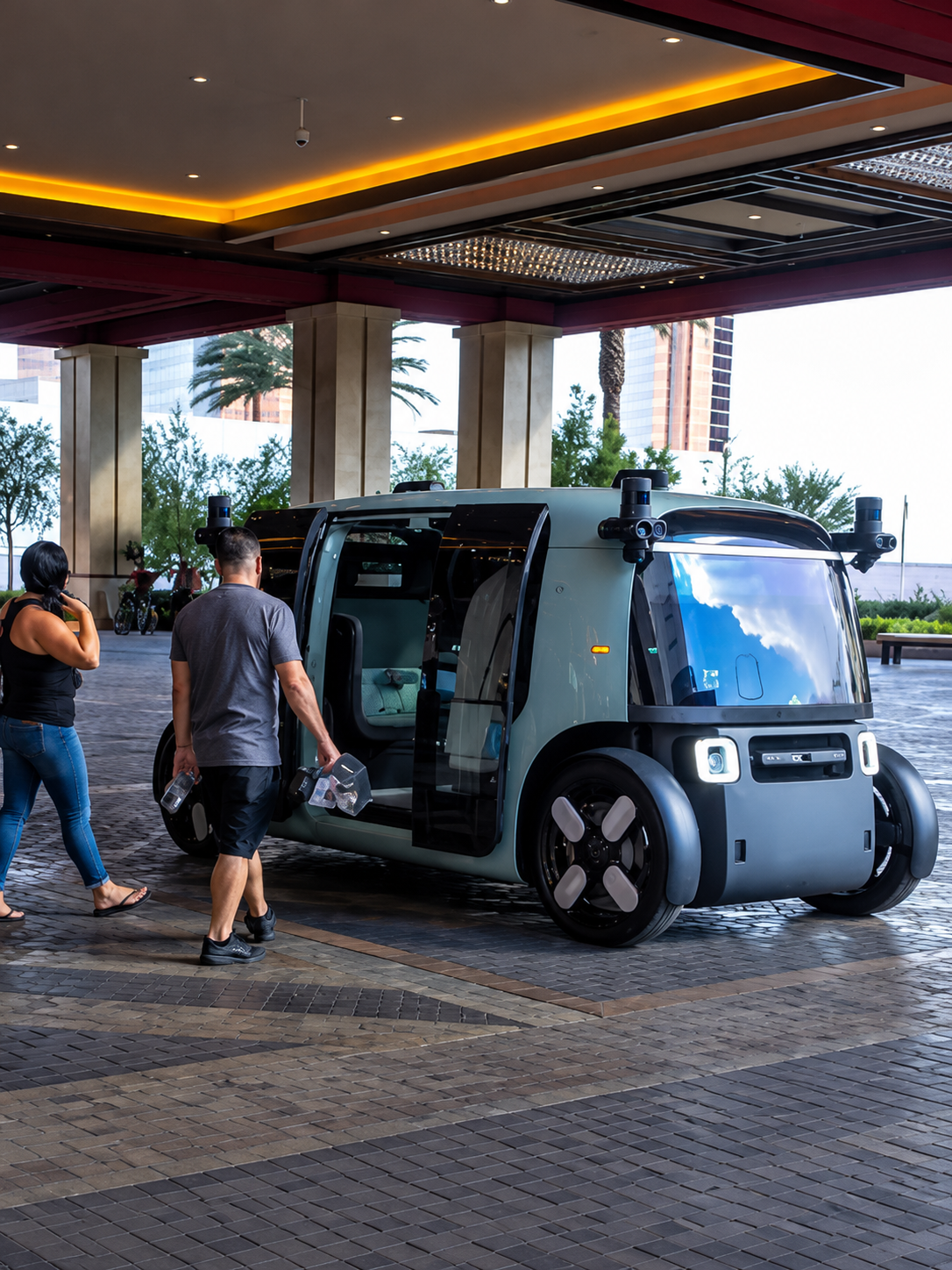
Amazon owned autonomous vehicle company Zoox has received federal approval to begin charging passengers for rides in its purpose-built robotaxis, marking a major milestone for the self-driving industry.
Amazon-owned autonomous vehicle company Zoox has secured a landmark regulatory approval that allows it to begin charging passengers for rides in its purpose-built robotaxis, becoming the first company in the United States authorized to commercially operate self-driving vehicles built without traditional driving controls such as steering wheels or brake pedals. The approval, granted by the National Highway Traffic Safety Administration (NHTSA), represents one of the most significant regulatory milestones for the autonomous vehicle industry and could accelerate the commercialization of fully driverless transportation in the United States. Under the exemption, Zoox may deploy up to 2,500 autonomous vehicles annually for the next two years, subject to ongoing federal oversight and reporting requirements. Until now, Zoox had been operating its autonomous shuttle-like vehicles in Las Vegas and San Francisco through free demonstration rides. According to the company, more than 500,000 passengers have experienced its robotaxi service during testing, providing valuable operational data as the company prepared for commercial deployment. Unlike many competitors, Zoox did not modify an existing passenger vehicle to create its autonomous platform. Instead, the company developed a fully electric vehicle specifically designed for autonomous transportation from the ground up. Its robotaxi features a symmetrical design with no driver's seat, steering wheel, accelerator, or brake pedals. Passengers sit on inward-facing benches, while the vehicle is capable of traveling in either direction without needing to turn around, a design intended to improve efficiency in urban environments. The vehicle can reach speeds of up to 75 miles per hour, according to public information released by the company. The regulatory decision distinguishes Zoox from many other autonomous vehicle operators that rely on conventional vehicles equipped with self-driving technology. REGULATORY APPROVAL MARKS INDUSTRY FIRST Federal safety standards have historically been written with human drivers in mind, requiring equipment such as steering wheels, pedals, mirrors, and windshield controls. To operate its purpose-built vehicles commercially, Zoox sought a temporary exemption from several Federal Motor Vehicle Safety Standards because its design does not include many of those conventional components. Earlier this year, regulators published the company's exemption request for public comment before completing their review. Following that review, NHTSA concluded that Zoox's vehicle could provide a level of safety equivalent to or greater than traditionally designed vehicles, allowing the company to move forward with commercial operations while remaining subject to enhanced safety reporting requirements. The agency retains the authority to revoke the exemption if significant safety concerns arise. COMMERCIAL ROLLOUT EXPECTED TO EXPAND Zoox is expected to begin charging passengers for rides in Las Vegas, with broader expansion planned as additional regulatory approvals are secured. Public reports indicate the company is also preparing future operations in cities including Miami and Austin, although local permitting requirements will continue to apply before commercial service begins in those markets. The commercialization of Zoox's service places the company in more direct competition with other autonomous mobility providers, including Alphabet's Waymo and Tesla's emerging robotaxi initiatives. AMAZON'S LONG TERM BET ON AUTONOMOUS MOBILITY Amazon acquired Zoox in 2020, viewing autonomous transportation as a strategic technology with applications extending beyond passenger mobility. In addition to robotaxi services, autonomous driving technology could eventually support logistics, package delivery, and other transportation-related businesses. Since the acquisition, Zoox has continued developing its autonomous driving software, custom-built vehicle platform, and manufacturing capabilities largely in-house, differentiating its approach from several competitors that rely on partnerships with traditional automakers. SAFETY REMAINS A KEY FOCUS Although the latest approval represents an important breakthrough, autonomous vehicles continue to face close regulatory scrutiny. Federal officials have increased oversight of self-driving technologies following several high-profile incidents involving autonomous vehicles across the industry. Zoox itself has issued software recalls in the past to address operational issues, and the company's commercial deployment remains subject to detailed incident reporting and continued monitoring by regulators. At the same time, NHTSA has indicated it is working toward establishing the country's first comprehensive national safety framework for autonomous vehicles, replacing the current mix of state-level requirements with more consistent federal standards. The approval marks a turning point for the U.S. autonomous vehicle industry. Rather than adapting conventional cars, Zoox has demonstrated a regulatory pathway for vehicles designed exclusively for autonomous operation. If commercial deployment proceeds successfully, the decision could encourage broader adoption of purpose-built robotaxis and influence future federal safety standards. For Amazon, the approval strengthens its position in autonomous mobility and signals continued investment in technologies that could reshape urban transportation and logistics over the coming decade


Comments (0)
You must be logged in to post comments.
No comments yet. Be the first to start the conversation!