
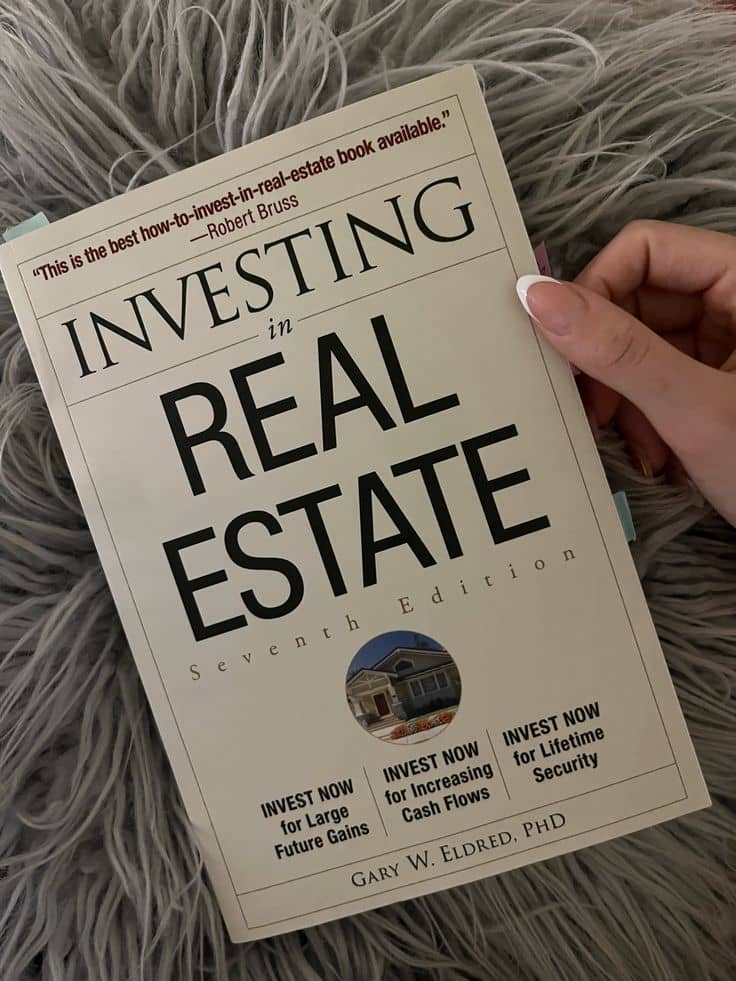
Investing in Real Estate
A practical guide to building long-term wealth through real estate by mastering property analysis, cash flow, financing, risk, and smart investment decisions.
There is something incredibly powerful about realizing that real estate is not just about buying a house, it is about understanding how money, property, markets, debt, and long-term wealth creation work together. Gary W. Eldred's Investing in Real Estate takes that idea and turns it into a practical education for anyone who has ever looked at a property and wondered, Could this actually make me money?
What I appreciated most about this book is that it does not make real estate investing sound like some overnight-riches fantasy. Instead, it approaches investing as a process of learning how to evaluate opportunities, manage risk, understand cash flow, and make decisions based on numbers rather than emotions.
Here are five lessons that stayed with me long after finishing the book.
1. Buy the Numbers, Not the Dream
One of the biggest lessons in real estate investing is that a beautiful property does not automatically make a good investment.
It is incredibly easy to fall in love with a house, an apartment, a neighborhood, or the idea of owning property. But investors have to step back and ask the less glamorous questions: What will this property actually earn? What are the expenses? What will financing cost? What happens if the property sits vacant? Does the potential return justify the risk?
Eldred's approach encourages investors to look at real estate through the lens of financial analysis rather than emotion.
And honestly, that lesson is bigger than real estate. An investment should be evaluated by what the numbers tell you, not by how much you like the property.
2. Cash Flow Is King, but Appreciation Matters Too
Real estate can create wealth in several ways, but cash flow is one of the most important pieces of the puzzle.
Rental income can provide recurring revenue, while property appreciation can potentially build long-term equity. Add mortgage principal reduction and potential tax advantages to the equation, and you begin to see why real estate has remained such a popular wealth-building strategy.
But the book also reminds us that investors need to understand the difference between income and profit. A property that collects plenty of rent can still become a bad investment if expenses, financing, maintenance, vacancies, and other costs eat away at the returns.
That was a major takeaway for me: don't just ask how much money a property brings in. Ask how much actually stays in your pocket.
3. Leverage Can Build Wealth, or Magnify Mistakes
Debt is one of the most powerful tools available to a real estate investor.
Borrowing allows an investor to control an asset with less of their own money, which can potentially increase returns when the investment performs well. But leverage works both ways. The same financing that can accelerate gains can also magnify losses when property values fall, expenses rise, or rental income disappears.
This is where responsible investing becomes so important.
The lesson isn't simply use debt. It is understand the debt you're taking on.
Interest rates, loan terms, monthly payments, down payments, and the property's ability to support its financing all matter. Real estate investing becomes much less exciting and much more intelligent when you start looking at debt as a tool that needs to be managed carefully rather than free money.
4. Real Estate Is a Business, Not Just a Property
This might be the lesson every aspiring landlord needs to hear.
Owning an investment property does not mean simply collecting a rent check every month. There are tenants to deal with, repairs to manage, insurance and taxes to consider, vacancies to anticipate, financing to monitor, and market conditions to understand.
In other words, the property is the asset, but the management is what helps determine whether that asset performs well.
This perspective changes everything. Successful investing requires organization, research, patience, and the willingness to make difficult decisions.
You cannot simply buy a property and hope it becomes profitable. You have to operate it like a business.
5. Think Long Term, But Never Stop Recalculating
Perhaps the most important mindset shift is understanding that real estate wealth is generally built over time.
Markets move. Interest rates change. Neighborhoods evolve. Rents increase and decrease. Properties need repairs. Economic conditions shift.
That means investors cannot afford to make one decision and then stop paying attention.
A long-term strategy does not mean blindly holding onto an investment forever. It means having a bigger financial picture while continually asking whether the property still makes sense.
That is what makes this book valuable: it encourages a mindset of analysis over impulse, patience over hype, and strategy over speculation.
Final Thoughts
Investing in Real Estate is a valuable resource for anyone who wants to understand real estate investing beyond the glamorous promises of quick profits and passive income.
Its biggest strength is its emphasis on thinking like an investor. Learn the numbers. Understand financing. Evaluate cash flow. Consider risk. Know your market. Treat your property like a business. And, most importantly, make decisions based on sound financial reasoning rather than excitement.
If you are completely new to real estate investing, this book can give you a useful foundation. And if you already own property, it can serve as a reminder that successful investing is not simply about owning real estate, it is about knowing why you own it, how it is performing, and where it fits into your larger financial goals.
Because at the end of the day, the goal isn't simply to own more properties.
The goal is to own better investments.
Disclosure: This review reflects my personal thoughts and takeaways from Investing in Real estate. The book link provided may be an affiliate link, meaning I may earn a small commission if you make a purchase or sign up through it, at no additional cost to you.
You Might Also Like