
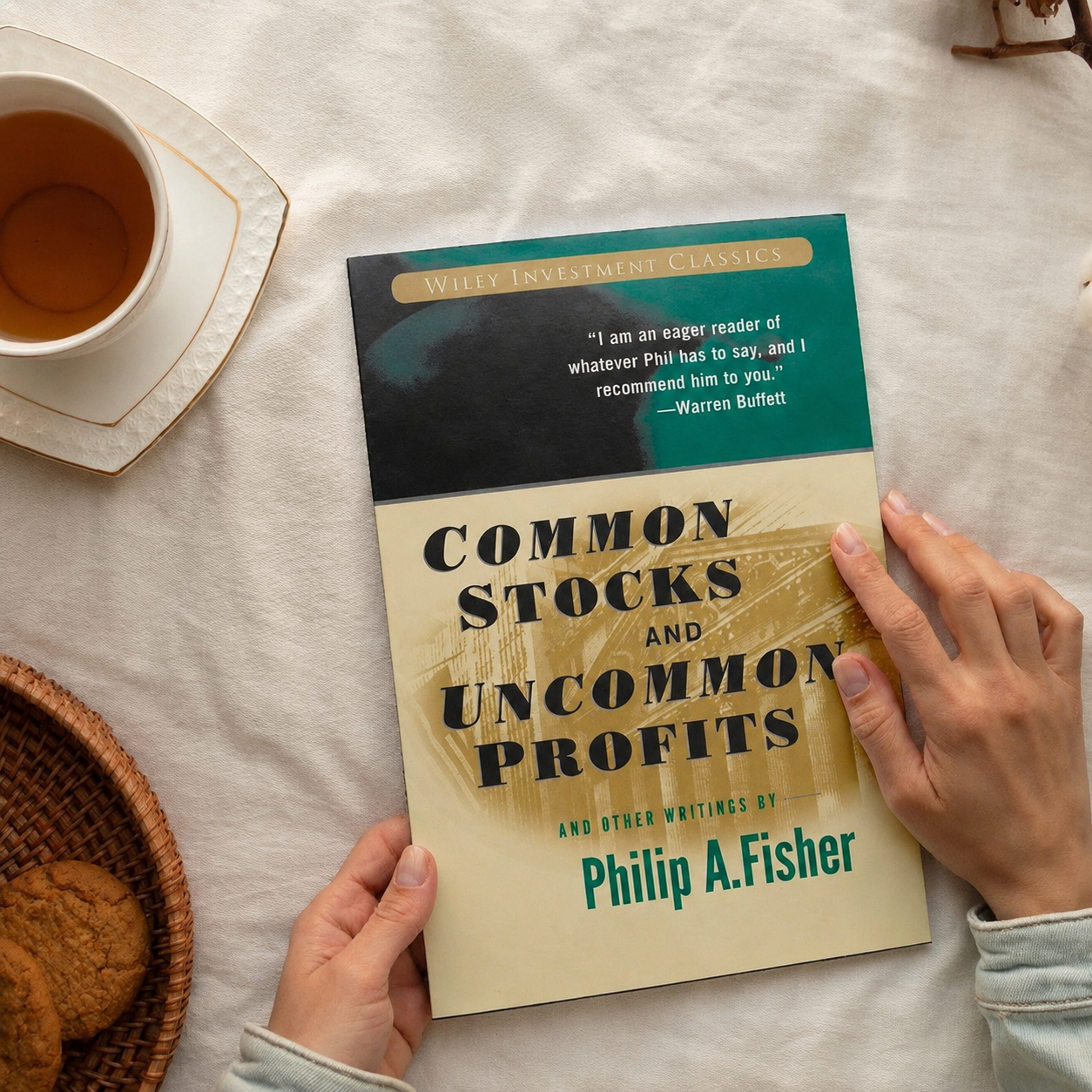
Common Stocks and Uncommon Profits
Author: Philip Fisher
Genre: Investing, Business, Stock Market, Growth Investing
Reading Level: Intermediate
Overall Rating: ⭐⭐⭐⭐⭐ (5/5)
When investors discuss the greatest books ever written on investing, Common Stocks and Uncommon Profits by Philip Fisher is almost always part of the conversation. First published in 1958, this timeless classic introduced readers to the principles of growth investing and fundamentally changed how many investors evaluate businesses.
The book has also earned praise from legendary investor Warren Buffett, who credits both Benjamin Graham and Philip Fisher with shaping his investment philosophy. While Graham focused on finding undervalued companies, Fisher emphasized identifying exceptional businesses capable of delivering long-term growth.
So, is this classic still worth reading in today's fast-changing financial markets? Here's my review.
Common Stocks and Uncommon Profits teaches investors how to identify outstanding companies with strong long-term growth potential rather than simply buying stocks because they appear cheap.
Philip Fisher argues that investing success comes from understanding a company's management, competitive advantages, research and development, profitability, and future growth prospects. Rather than focusing solely on financial ratios, the book encourages readers to look deeper into the quality of a business.
One of Fisher's most influential concepts is the importance of investing in exceptional businesses and holding them for many years, allowing the power of compounding to work in your favor.
This book is ideal for:
-
Investors who want to understand growth investing.
-
Long-term stock market investors.
-
Readers interested in evaluating business quality.
-
Investors looking beyond basic financial statements.
-
Anyone who wants to learn how successful investors identify outstanding companies before they become widely recognized.
It is especially valuable for investors who have already learned the basics of value investing and want to expand their analytical skills.
Key Lessons from Common Stocks and Uncommon Profits
1. Buy Great Companies, Not Just Cheap Stocks
Fisher explains that paying a fair price for an exceptional business is often better than buying a mediocre company simply because it's inexpensive.
2. Management Quality Matters
A company's leadership plays a significant role in its long-term success. Strong management teams are more likely to innovate, adapt, and create lasting shareholder value.
3. Think Long Term
Frequent buying and selling often works against investors. Fisher advocates holding high-quality companies for many years as they continue to grow.
4. Research Beyond Financial Statements
Financial reports tell only part of the story. Investors should also understand a company's products, customers, competitors, and industry position before investing.
5. Compounding Rewards Patience
Owning outstanding businesses over long periods allows earnings and shareholder returns to compound, creating substantial wealth over time.
One of the book's greatest strengths is its focus on business quality instead of short-term stock price movements. Fisher encourages readers to think like business owners rather than traders, making the lessons valuable regardless of market conditions.
I also appreciated how the book emphasizes qualitative analysis, examining management, innovation, competitive advantages, and company culture. These factors often determine whether a business can continue growing for decades.
Perhaps the most compelling aspect is Fisher's long-term perspective. His philosophy reminds readers that extraordinary investment returns usually come from owning exceptional companies, not constantly trading stocks.
Potential Drawbacks
Some examples in the book are naturally dated, reflecting the business environment of the 1950s. While the companies discussed may no longer dominate today's markets, the underlying principles remain highly relevant.
The book also assumes readers have some familiarity with investing concepts. Complete beginners may find it easier after first reading an introductory investing book such as The Intelligent Investor.
Additionally, readers looking for detailed discussions about ETFs, index funds, cryptocurrencies, or modern technology companies will need to supplement this book with more recent resources.
Recommended reading order:
-
Common Stocks and Uncommon Profits – Philip Fisher
-
The Little Book of Common Sense Investing – John C. Bogle
Final Verdict
Common Stocks and Uncommon Profits remains one of the most influential investing books ever written. Although first published more than six decades ago, its lessons about business quality, management excellence, long-term thinking, and disciplined research continue to shape the investment strategies of professionals and individual investors alike.
If you're serious about becoming a better stock market investor, this book deserves a permanent place on your reading list.
Overall Rating: ⭐⭐⭐⭐⭐ (5/5)
Buy the Book
Ready to explore Philip Fisher's timeless investing principles?
👉 Buy Common Stocks and Uncommon Profits on Amazon
Affiliate Disclosure
This article contains affiliate links. As an Amazon Associate, I earn from qualifying purchases. If you purchase a book through the link above, I may receive a small commission at no additional cost to you. Thank you for supporting my work.
You Might Also Like