
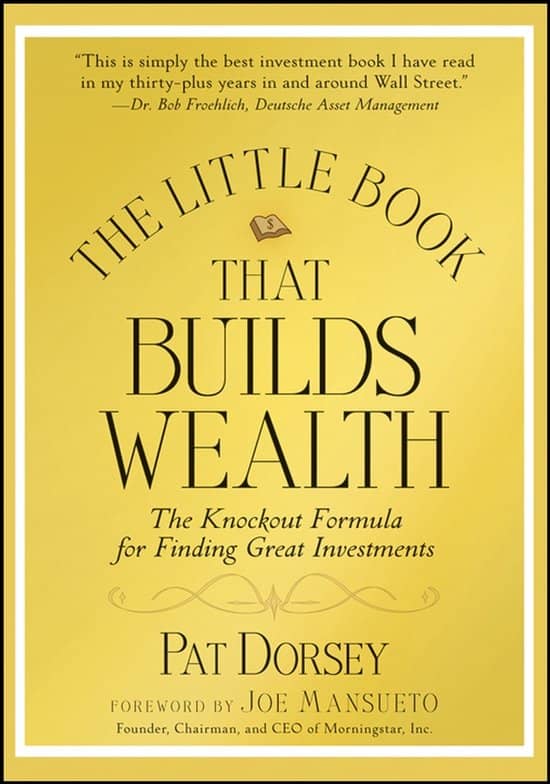
The Little Book That Builds Wealth: Finding Great Investments Through Economic Moats
The Little Book That Builds Wealth is a practical guide to identifying companies with durable competitive advantages and finding investments capable of creating long-term value. Its central message is simple: great investments often come from great businesses and great businesses are protected by strong economic moats.
In The Little Book That Builds Wealth, Pat Dorsey explains how investors can identify companies with lasting competitive advantages and use those advantages to make better long-term investment decisions. The book focuses heavily on the concept of an economic moat, including advantages created by strong brands, switching costs, network effects, and cost advantages.
What makes this book particularly useful is that it gives investors a practical way to think about why some companies remain profitable and competitive for years while others struggle to maintain their position.
Here are three lessons that stood out to me.
1. Look for Companies With an Economic Moat
A company may be profitable today, but what protects those profits from competitors tomorrow?
Dorsey argues that investors should look for businesses with durable competitive advantages, an economic moat that makes it difficult for competitors to take away their customers or profits.
This can come from powerful brands, network effects, switching costs, or cost advantages.
The lesson is simple: don't just look for a profitable company; look for what protects its profitability.
2. A Great Business Can Become a Great Investment
Identifying a company with a strong moat is only the beginning. Investors still need to consider whether the stock is reasonably valued. Even an exceptional business can produce disappointing returns if investors pay too much for it.
Dorsey's framework therefore combines business quality with valuation, helping investors think about both the strength of a company's competitive advantage and what that advantage is worth.
3. Think Long Term
Economic moats matter because competitive advantages can compound over time.bA business that consistently earns attractive returns and can defend its position may have the ability to create significant value for shareholders over many years.
This encourages investors to move away from short-term market predictions and focus instead on business quality, durability, and long-term value creation.
📖 Read The Little Book That Builds Wealth
Learn how to identify economic moats, evaluate competitive advantages, and find better long-term investments.
The Little Book That Builds Wealth is a concise and practical book for investors who want to understand what makes a business truly difficult to compete against.
Its biggest lesson is that successful investing is not simply about finding companies that are growing today. It is about finding businesses with advantages that can protect their profits and create value over the long term.
For investors interested in fundamental analysis, long-term investing, and Warren Buffett's economic moat philosophy, this book is a worthwhile addition to their investing library.
Disclosure: This review reflects my personal thoughts and takeaways from The Little Book That Builds Wealth. The book link may be an affiliate link, meaning I may earn a small commission if you make a purchase through it, at no additional cost to you.